
A commercial battery backup system can look economical at procurement while becoming expensive to operate if maintenance requirements are overlooked. The initial equipment price is only one part of ownership cost.
Labor, inspections, replacement components, battery degradation, inverter servicing, software support, and downtime can all influence the amount a facility ultimately spends to maintain dependable backup power.
For commercial battery backup systems, the important question is therefore not simply how often equipment needs maintenance. We need to understand which maintenance activities protect availability, which ones consume labor, and which ones can prevent much larger replacement or outage costs.
Lifecycle cost starts after commissioning. A system with a low initial price can require more frequent inspections, more manual intervention, or greater dependence on specialist technicians. Conversely, a system with a higher upfront cost may reduce recurring service requirements through monitoring, modular equipment, or easier access to components.
NREL's storage-cost methodology treats operations and maintenance as part of the economic lifetime of a storage asset and distinguishes fixed O&M from usage-related costs.
Its research also notes that maintenance assumptions can differ substantially depending on whether they include only routine maintenance or also capacity maintenance and replacement.
That distinction matters for procurement. Comparing two systems using only their annual service contract prices can hide future battery augmentation, component replacement, or labor requirements.
Maintenance has value when it reduces the probability or duration of an equipment failure. For a commercial installation, routine activities may include visual inspections, electrical checks, thermal-system inspection, connection verification, firmware or control-system maintenance, alarm review, and battery-system monitoring.
The exact schedule depends on the equipment architecture and manufacturer's requirements. We should not assume that every battery system requires the same intervention frequency.
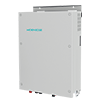
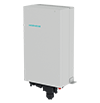
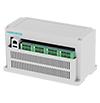
The WidenEdge weak-grid solution, for example, uses external current and voltage sampling interfaces for real-time load monitoring and a three-phase four-wire architecture designed to handle unbalanced loads.
Such features can influence how technicians diagnose operating conditions because more information can be available without relying entirely on physical inspection.
A useful lifecycle calculation should therefore assign a cost to both scheduled maintenance and the labor required to investigate abnormal conditions.
Battery degradation is where lifecycle economics become more complicated. A battery can remain operational while its usable capacity gradually declines. If the facility requires a particular backup duration, simply keeping the system electrically functional may not be enough.
NREL's 2022 storage analysis explicitly includes battery replacement or augmentation in fixed O&M assumptions because degradation can require additional capacity to maintain the system's rated capability over time. Its 2024 analysis similarly includes augmentation costs intended to maintain rated capacity over the modeled lifetime.
For commercial battery backup systems, we would therefore evaluate maintenance together with the battery warranty and performance guarantee. Questions should include how capacity is measured, what degradation threshold triggers corrective action, whether augmentation is expected, and who pays for the additional capacity.
This approach prevents a common mistake: treating battery maintenance as if it were equivalent to servicing a conventional piece of electrical equipment. The battery's changing capacity can become a direct lifecycle cost even when no obvious component has failed.
The battery is not the only asset that requires attention. The inverter or PCS, cooling equipment, protection devices, communications hardware, and auxiliary systems can all influence availability and maintenance expenditure.
A power-conversion system operating continuously in a commercial facility may experience different thermal and electrical stresses from one used only occasionally for emergency backup. Operating profile should therefore be considered when estimating service requirements.
Cooling deserves particular attention because thermal management affects both power electronics and battery operating conditions. Filters, fans, heat exchangers, ventilation paths, and sensors can require inspection or replacement depending on the system design and environment.
We would also examine whether major components can be serviced individually. Modular equipment can potentially limit the scope of a repair, whereas a design requiring extensive disassembly may increase technician time and downtime.
The economic benefit depends on the actual architecture and service procedure, so buyers should request manufacturer-specific maintenance schedules rather than relying on generic claims.
Digital monitoring can change maintenance economics by shifting some work from scheduled site visits toward condition-based intervention. If operating data, alarms, temperatures, voltages, and system states can be reviewed remotely, technicians may be able to identify abnormal conditions before traveling to the site.
That does not eliminate physical maintenance. It can, however, help distinguish normal operation from conditions requiring inspection. For facilities with multiple sites or limited technical staff, avoiding unnecessary visits can have meaningful value.
The distinction becomes especially important for grid resilience solutions, where the objective is not simply to store energy but to preserve power availability during grid disturbances.
NREL's lifecycle-cost framework includes O&M, battery replacement, and other costs when evaluating resilient energy systems, demonstrating why resilience should be assessed over the full analysis period rather than from capital cost alone.
Service response also matters. A monitoring system that identifies a fault but leaves the facility waiting days for qualified support does not provide the same operational value as monitoring connected to a defined service process.
We recommend comparing maintenance on an annual and lifecycle basis rather than asking only for the first year's service price. Build a cost model covering scheduled labor, remote monitoring, spare parts, battery augmentation or replacement assumptions, inverter servicing, cooling-system maintenance, software support, and expected downtime.
NREL's published lifecycle-cost methodology defines LCC as the present value of capital costs, O&M, battery replacement, and other relevant project costs over the analysis period. That framework is useful because it forces procurement teams to consider costs that occur years after commissioning.
WidenEdge approaches commercial storage around continuous power availability under unstable-grid conditions, with its weak-grid solution using real-time load monitoring and flexible AC/DC coupling.
For buyers, the practical test is straightforward: ask the manufacturer to document what must be maintained, how often it must be maintained, who performs the work, what components are expected to be replaced, and what happens when the system reports a fault.
Grid resilience solutions should be evaluated on the cost of maintaining dependable capability, not merely the cost of installing batteries and PCS equipment. A system with predictable maintenance, strong monitoring, accessible components, and clearly defined replacement responsibilities can produce a more transparent lifecycle cost than a cheaper system whose long-term service requirements are uncertain.
The best procurement decision is therefore the one that connects maintenance effort to availability. Once labor, degradation, replacement, monitoring, and downtime are included in the financial model, the real cost of backup power becomes much easier to compare.
Return