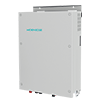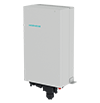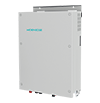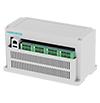
Grid-forming inverters work by actively establishing their own voltage waveform and frequency references as virtual voltage sources, rather than merely injecting current into an existing grid. As renewable energy and battery storage expand, this technology maintains voltage and frequency stability without relying on conventional synchronous generators. This is where grid forming inverters play an important role. At WidenEdge, we develop microgrid solutions based on grid-forming power conversion technology for off-grid, weak-grid, and hybrid energy systems, helping integrators build stable and coordinated power networks.
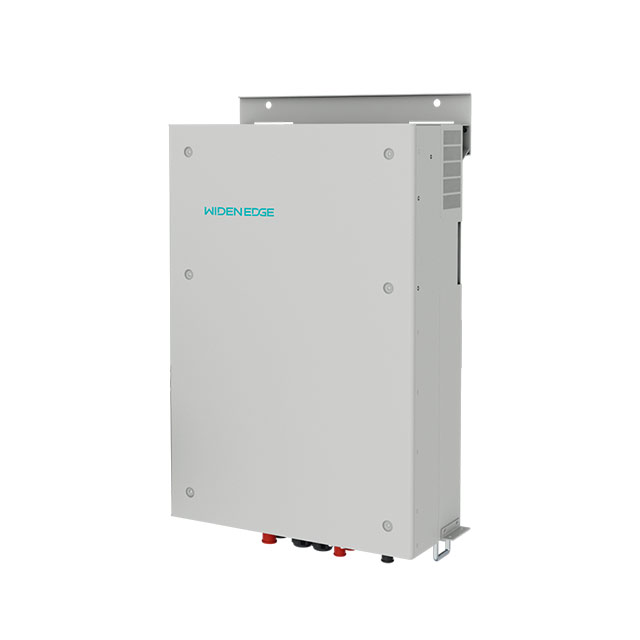
Unlike conventional grid-following inverters, grid forming inverters establish their own voltage waveform and operating frequency instead of waiting for a stable external grid reference. This capability allows them to serve as the electrical reference for an isolated or weak power system.
The inverter continuously measures system conditions and adjusts its output through advanced control algorithms. Rather than responding only to existing grid signals, it actively creates and maintains stable operating conditions for connected loads and distributed energy resources.
This operating principle makes the technology particularly suitable for renewable energy systems where conventional rotating generators may be limited or unavailable. Stable voltage and frequency become part of the inverter's control objectives instead of depending on external equipment.
One of the defining characteristics of grid forming inverters is their ability to regulate voltage and frequency in real time. Internal control algorithms continuously monitor electrical conditions and modify active and reactive power output accordingly.
Many modern systems implement techniques such as droop control or virtual synchronous generator control. These methods allow the inverter to emulate some behaviors traditionally associated with synchronous machines while remaining fully power-electronic based.
When electrical loads increase, the inverter adjusts its power delivery while maintaining acceptable voltage and frequency ranges. When renewable generation fluctuates, the controller responds rapidly to restore system balance without requiring mechanical inertia.
This coordinated regulation supports improved operational stability across various microgrid solutions, particularly where renewable generation introduces changing operating conditions.
Within modern microgrid solutions, grid forming inverters frequently act as the primary electrical reference for the entire system. Other devices, including renewable generators, battery storage, diesel generators, and controllable loads, can coordinate around this stable reference.
During normal operation, multiple distributed energy resources exchange power according to system demand. The inverter supervises voltage stability while coordinating power flow between generation and storage assets.
If the utility grid becomes unavailable, properly designed control strategies can support seamless transition into islanded operation without losing system stability. When utility power returns, synchronization allows reconnection while maintaining coordinated operation. WidenEdge's grid-forming MGC PCS products are designed to support seamless switching between grid-following and grid-forming modes for these applications.
Weak-grid environments often experience voltage fluctuations, limited fault strength, and unstable frequency references. Conventional grid-following equipment may struggle because it depends on an already stable electrical source.
Grid forming inverters reduce this dependency by establishing their own voltage and frequency reference. Instead of following instability, they contribute directly to system regulation.
This capability can improve operational continuity for industrial facilities, island power systems, remote communities, and hybrid renewable installations where utility conditions are less predictable.
For battery energy storage projects, stable inverter control also improves coordination between charging, discharging, renewable generation, and local loads, supporting more consistent overall system performance.
Choosing appropriate grid forming inverters requires evaluating the overall system architecture rather than focusing only on inverter power ratings. Battery characteristics, renewable generation profiles, load behavior, communication requirements, and protection strategies all influence system performance.
Engineers should also consider whether the inverter supports coordinated operation with multiple distributed energy resources. Flexible control modes simplify integration across grid-connected, weak-grid, hybrid, and off-grid applications.
Communication capabilities are another important consideration. Effective coordination between battery management systems, local controllers, photovoltaic equipment, and supervisory control platforms helps optimize long-term operation.
System scalability should also be evaluated during project planning. As energy demand changes, modular architectures can simplify future expansion while maintaining stable control across the entire installation.
Developing dependable microgrid solutions requires both advanced power electronics and carefully designed control strategies. At WidenEdge, we focus on full-SiC grid-forming power conversion technology for applications including off-grid systems, weak-grid projects, renewable energy integration, and hybrid microgrids.
Our grid-forming inverters and control platforms are designed to coordinate battery storage, renewable generation, diesel generators, and local electrical loads while supporting stable voltage and frequency control across different operating modes.
Rather than relying on a single operating scenario, our engineering approach supports flexible deployment across industrial, commercial, and infrastructure applications where reliable power coordination is required.
As renewable generation continues to expand, grid forming inverters will become increasingly important for maintaining stable electrical networks that operate beyond the limitations of conventional grid-following technology. Their ability to establish voltage and frequency references, coordinate distributed energy resources, and support islanded operation makes them a key building block of modern microgrid solutions.
At WidenEdge, we are committed to advancing grid-forming power conversion technology through practical engineering and reliable system integration. By focusing on stable control, flexible deployment, and coordinated energy management, we help customers develop microgrid systems that meet real operational requirements across weak-grid, off-grid, and hybrid energy applications.
Return