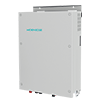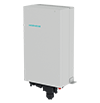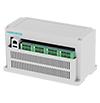
Reliable operation becomes more challenging when electrical networks have low short-circuit capacity, fluctuating voltage, or high renewable penetration. We recognize these conditions because they are common in modern distributed energy applications. At WidenEdge, we focus on grid-forming power conversion technology that helps improve system stability in weak-grid environments while supporting renewable integration, energy storage, and flexible power management.
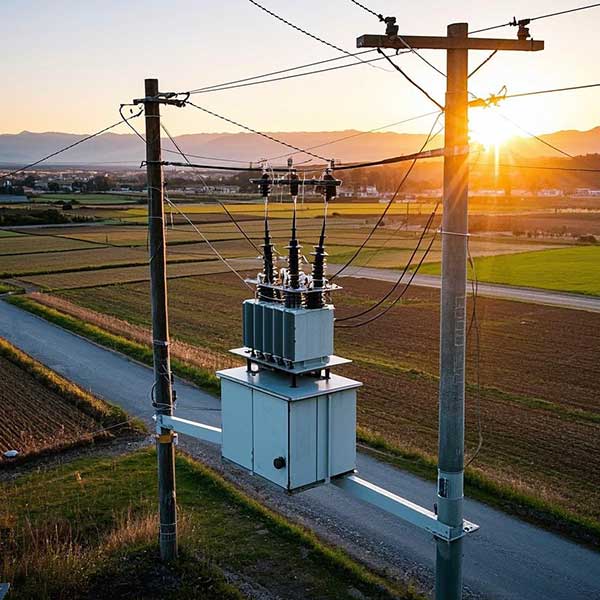
Weak electrical grids are more sensitive to sudden load changes and intermittent renewable generation than conventional utility networks. Voltage fluctuations, frequency deviations, and reduced system inertia can all affect operational stability if energy resources are not properly coordinated.
We address these challenges through microgrid PCS designed with grid-forming capability. Instead of simply following the existing grid conditions, the power conversion system withgrid-forming control canestablish stable voltage andfrequency references for themicrogrid. This operating approach helps maintain orderly power delivery even when the utility grid is weak or temporarily unavailable.
Our design philosophy also supports applications where renewable generation continues to increase. By coordinating energy storage with distributed generation, the system contributes to a more balanced electrical environment without relying entirely on conventional synchronous generators.
Effective microgrid solutions require more than combining batteries and renewable energy sources. Stable operation depends on intelligent coordination between power conversion equipment, energy management systems, and distributed energy resources.
At WidenEdge, we apply grid-forming technology to provide an electrical reference for connected assets. This allows renewable generation, battery energy storage, and local loads to operate within a coordinated framework while reducing the impact of disturbances originating from weak utility networks.
The system architecture enables flexible operation across both grid-connected and off-grid scenarios. Through continuous coordination, the platform maintains consistent control responses during grid disturbances, ensuring operational continuity.
Maintaining voltage and frequency within acceptable operating ranges is one of the primary objectives of a stable microgrid. Weak grids often experience greater variations because they possess limited electrical strength and lower system inertia.
Our microgrid PCS incorporates grid-forming control strategies together with Virtual Synchronous Generator (VSG) technology. By emulating key characteristics of conventional synchronous machines, the system contributes to voltage establishment and frequency regulation while supporting stable power exchange among connected resources.
Droop control further enables multiple distributed energy resources to share loads in a coordinated manner. Instead of relying on a single generation source, connected assets respond collectively, improving operational stability across changing load conditions.
These coordinated control methods help maintain reliable operation without depending solely on traditional rotating generators, making them suitable for renewable-based microgrids and weak-grid applications.
Renewable energy introduces variability because solar and wind resources naturally fluctuate throughout the day. Without coordinated control, these variations may increase voltage instability and frequency deviations, particularly in electrically weak systems.
Our microgrid solutions integrate battery energy storage with renewable generation through intelligent power conversion and supervisory control. During periods of excess renewable production, stored energy absorbs available electricity for future use. When renewable generation decreases, stored energy can support local demand while maintaining system balance.
This coordinated operation enables renewable resources to participate more effectively in local power systems. Rather than treating storage and renewable generation as separate assets, the microgrid manages them as complementary resources working toward common operational objectives.
The same coordinated architecture also provides flexibility for future system expansion as additional renewable generation or storage capacity is introduced.
Grid disturbances occasionally require a microgrid to operate independently from the utility network. Maintaining stability during these transitions depends on precise synchronization and coordinated power control.
We design microgrid PCS to support smooth switching between grid-following and grid-forming operating modes. This capability allows the system to adapt automatically as external grid conditions change while maintaining stable voltage and frequency for local loads.
When the utility grid becomes unavailable, the microgrid can continue operating with locally available energy resources. Once utility conditions recover, synchronized reconnection supports a smooth transition back to grid-connected operation.
This operational flexibility makes the technology suitable for industrial facilities, commercial sites, islanded power systems, and other distributed energy applications where operational continuity is important.
As distributed energy systems become increasingly complex, centralized coordination plays an important role in maintaining reliable performance. Multiple energy resources must operate together while responding continuously to changing demand and generation conditions.
Our microgrid solutions combine grid-forming PCS technology with coordinated energy management to support photovoltaic generation, battery energy storage, EV charging, and other distributed energy assets within one integrated platform. Intelligent supervisory control continuously evaluates system conditions and dispatches energy resources according to operational requirements.
This integrated approach supports more stable power delivery while improving the utilization of available renewable energy. Because all major system components operate within a coordinated control framework, the microgrid can respond more effectively to changing electrical conditions without unnecessary operational complexity.
Improving weak-grid stability requires coordinated power conversion, intelligent control, and system-level integration rather than relying on individual devices alone. We continue to develop grid-forming technologies that help microgrids operate more reliably across grid-connected, weak-grid, and off-grid environments while supporting the growing adoption of renewable energy and energy storage.
WidenEdge specializes in full-SiC grid-forming PCS technology for microgrid and off-grid energy storage applications. By focusing on grid-forming control, Virtual Synchronous Generator technology, coordinated power management, and flexible system integration, our engineering team provides practical solutions that support stable, resilient, and adaptable energy systems for a wide range of distributed power applications.
Return