
Power conversion technology plays a central role in modern electrical systems, but not all inverters are designed for the same purpose. We often receive questions about whether an energy storage system requires a specialized inverter or whether a traditional inverter can perform the same function. Although both devices convert electrical power, their operating objectives, control strategies, and system integration capabilities differ significantly. Understanding these differences helps system designers, project developers, and end users make informed decisions for renewable energy and distributed power applications.
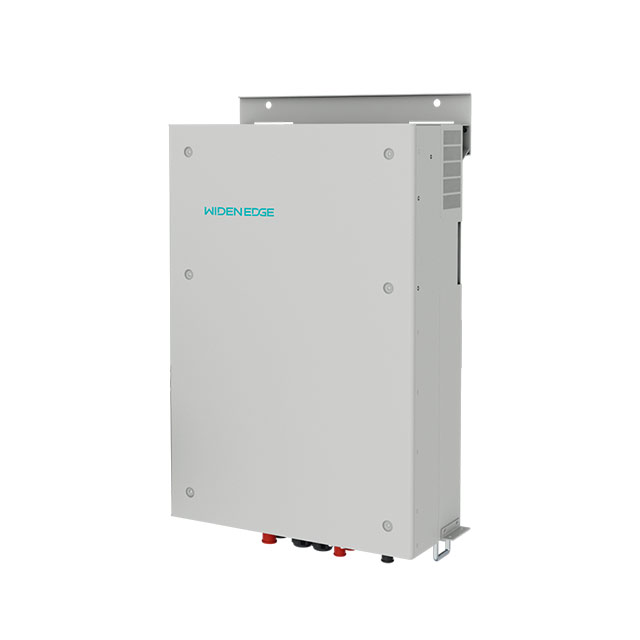
A traditional inverter primarily converts direct current (DC) into alternating current (AC) for immediate use or grid export. It usually operates by following the voltage and frequency provided by the utility grid. Its primary responsibility is efficient power conversion rather than managing stored energy.
An energy storage inverter, by comparison, is designed to manage bidirectional power conversion between battery systems and the electrical network. Besides DC-to-AC conversion, it manages battery charging and discharging, supports bidirectional power flow, and coordinates multiple operating modes according to system requirements. These capabilities enable batteries to participate actively in power management rather than serving as passive storage devices.
Because battery systems experience varying charging conditions, load demands, and renewable generation levels, the inverter must continuously monitor system status and adjust its operating strategy. This additional layer of control distinguishes energy storage applications from conventional power conversion equipment.
Traditional inverters generally rely on a stable utility grid for synchronization. If grid voltage or frequency falls outside acceptable limits, they typically disconnect according to applicable protection requirements. This operating philosophy is appropriate for conventional grid-connected photovoltaic systems.
Within microgrid solutions, however, the inverter often assumes a broader responsibility. Instead of simply following the grid, it may support local voltage regulation, frequency stabilization, and coordinated operation among batteries, renewable generation sources, generators, and electrical loads. These capabilities become particularly valuable in weak-grid, hybrid, or off-grid environments where maintaining stable power requires continuous coordination.
As distributed energy resources become increasingly integrated, system coordination has become just as important as conversion efficiency. The inverter therefore evolves from an individual component into an active participant in overall energy management.
Another important distinction lies in control architecture. Traditional inverters mainly optimize power conversion based on available input energy while complying with grid operating requirements.
An energy storage inverter performs additional control tasks throughout system operation. It exchanges information with battery management systems, supervisory controllers, renewable generation equipment, and protection devices. Through this coordinated communication, charging and discharging processes can be managed according to operating objectives rather than simple energy availability.
This broader integration also supports multiple operating scenarios. Depending on project requirements, the inverter may coordinate renewable generation, battery storage, backup generators, and local electrical loads while maintaining stable power quality. Such flexibility allows engineers to configure systems for grid-connected, hybrid, or islanded operation without major changes to the overall system architecture.
The operating environment strongly influences inverter selection. Traditional inverters remain well suited for many standard photovoltaic installations where energy is immediately consumed or exported to a stable utility grid.
Microgrid solutions become increasingly relevant when projects require greater operational flexibility. Industrial facilities, commercial campuses, island power systems, remote communities, emergency backup applications, and renewable energy projects with battery storage often require coordinated management of multiple energy sources instead of depending solely on utility infrastructure. These operating conditions place greater emphasis on system stability, operational continuity, and intelligent power management.
Selecting an appropriate inverter therefore depends less on output power alone and more on the operational objectives of the complete electrical system. Where batteries actively participate in energy scheduling or independent operation is required, specialized energy storage technology provides capabilities beyond those of conventional inverters.
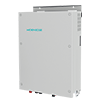
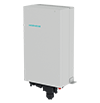
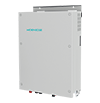
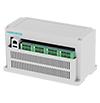
We believe effective power conversion requires both reliable hardware and intelligent system control. At WidenEdge, we specialize in developing power conversion technologies for renewable energy integration, off-grid systems, weak-grid environments, and modern microgrids. Our product portfolio includes energy storage inverters, PV/DC converters, EV/DC converters, and local control solutions designed to support coordinated energy management across diverse applications.
Rather than viewing the inverter as an isolated device, we focus on how each component contributes to overall system operation. Our engineering approach emphasizes compatibility, coordinated control, and practical deployment across different project configurations. By supporting grid-forming control technologies and flexible system architectures, WidenEdge provides solutions that can adapt to changing operational requirements while supporting reliable power conversion.
Return