
Deploying advanced power electronics into modern electrical grids requires navigating a complex system of regional compliance frameworks. Regulatory bodies across North America, Europe, and Australia continuously update their grid codes to accommodate higher volumes of renewable generation assets.
Understanding these evolving testing standards is critical for developers seeking commercial operation permits without experiencing project delays. Every jurisdiction enforces unique criteria regarding synthetic inertia, fault ride-through, and black-start functionality.
Navigating these multi-continental requirements demands technical foresight from equipment providers. Engineering teams must look beyond basic safety listings to verify grid-forming software validation before purchasing equipment.
Compliance verification involves factory testing, mathematical modeling, and certified field performance reports. Equipment manufacturers must engineer hardware capable of satisfying regional interconnection mandates natively.
In North America, grid interconnection hinges on meeting stringent safety and grid-support standards before permission to operate is granted. The baseline market access vector consists of UL 1741 SB, IEEE 1547, and California's CSIP V2.1 protocols.
Together, these certifications define the operational parameters for advanced inverter behavior, smart-inverter communications, and fault ride-through. Without these credentials, connecting utility-scale storage systems to the local power system remains legally and technically impossible.
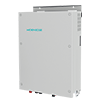
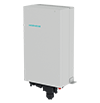
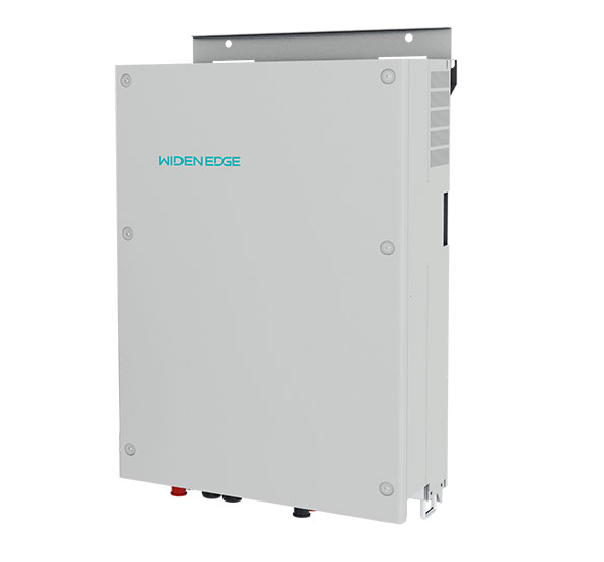
To resolve these regulatory bottlenecks directly, the WidenEdge MGC series has secured UL 1741 SB, IEEE 1547, and CSIP V2.1 certifications. These credentials serve as the mandatory market entrance threshold for commercial power projects across the United States.
Integrating a fully certified energy storage inverter ensures that developers can fulfill utility interconnection requests while maintaining full grid-forming functionality under weak-grid constraints.
European electrical markets enforce strict harmonization through the EN 50549 standard series for low and medium voltage generation systems. These directives dictate how distributed generators interact with distribution network operators during rapid frequency excursions.
Furthermore, national network codes demand specific fault-in-feed capabilities that challenge standard grid-following electronics entirely. Navigating these requirements demands complete transparency from technology suppliers regarding internal control loops, protection settings, and protective tripping thresholds.
Grid-forming units deployed in European territories must demonstrate advanced synthetic inertia and precise damping responses under stress. Certification bodies require comprehensive test reports covering harmonic distortion, flicker limits, and active power control loops.
Delivering effective microgrid solutions within European networks involves proving seamless transitions between grid-tied and islanded modes. Manufacturers must secure formal conformity certificates issued by accredited testing laboratories before commercial market entry occurs.
Australian regulatory landscapes present unique challenges driven by high rooftop solar penetration and weak transmission backbones. The Clean Energy Council mandates strict compliance with AS/NZS 4777.2 for power conversion equipment connected locally.
Concurrently, the Australian Energy Market Operator enforces rigorous system strength requirements for large-scale assets. Developers operating in this region face intense scrutiny regarding dynamic voltage control, reactive current injection, and transient recovery performance metrics.
Generators connecting to the National Electricity Market must satisfy demanding performance standards covering dynamic voltage support and fast frequency response. Equipment vendors must list their compliant models on official registries managed by industry authorities.
Failing to meet these local specifications results in immediate connection rejections and costly project delays. WidenEdge provides fully certified hardware engineered to satisfy these stringent regional conditions effortlessly for developers.
Proving grid-forming capabilities requires more than standard static laboratory bench tests under ideal conditions. Testing authorities increasingly demand Hardware-in-the-Loop simulations to evaluate dynamic performance under severe network contingencies.
Engineers must subject inverter control firmware to realistic weak-grid emulation profiles replicating multi-region disturbances across various operating points. Satisfying these advanced verification steps separates reliable equipment suppliers from vendors offering superficial compliance documentation.
Hardware validation also encompasses thermal endurance, harmonic compliance, and robust fault-current injection behaviors across operational cycles. Accredited testing agencies scrutinize every operating mode to ensure grid stability remains uncompromised during sudden load rejections.
Manufacturers invested in international markets must maintain dedicated compliance engineering teams to manage these complex evaluation cycles successfully. Rigorous testing protocols ultimately protect utility operators from unexpected resonance events and widespread operational failures.
Factory Acceptance Testing serves as the final physical checkpoint before equipment departs for international project sites. Quality assurance teams verify individual cabinet performance against certified reference designs and regional grid code parameters.
Comprehensive factory test reports must accompany every shipment to satisfy local utility inspection workflows seamlessly and efficiently. Overcoming documentation details during factory staging can trigger expensive on-site commissioning hold-ups and severe regulatory penalties.
Maintaining multi-region compliance requires continuous firmware management as international grid codes evolve over time. Forward-thinking manufacturers provide secure remote diagnostic tools that allow operators to adjust control parameters safely.
Pre-certified systems streamline regulatory approval across diverse electrical networks worldwide. Selecting fully verified hardware ensures long-term operational security and protects capital investments from regulatory obsolescence globally.
Return