Selecting a Power Conversion System supplier for unstable electrical networks requires an evaluation methodology far removed from standard industrial procurement.
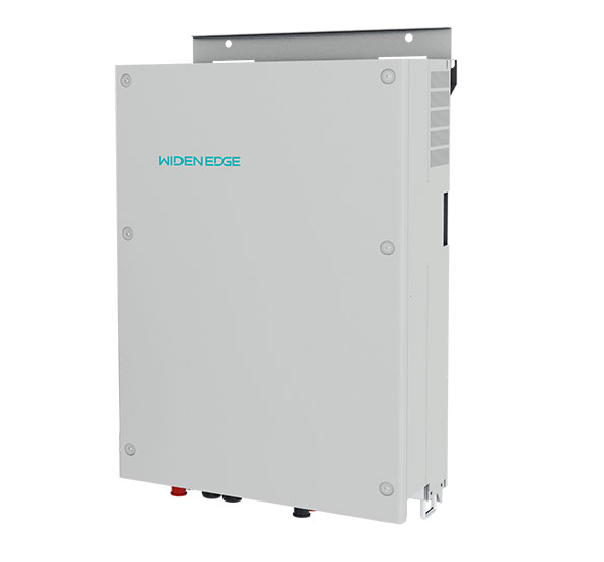
Weak-grid scenarios present severe technical hurdles, including high grid impedance, exceptionally low short-circuit ratios, and rapid voltage sags. Engineering teams must look beyond glossy marketing sheets to identify vendors capable of sustaining localized stability under duress.
When evaluating potential partners, engineering teams across leading microgrid companies must focus on whether their inverters can handle dynamic load shifts without external references.
WidenEdge understands that this selection process demands a rigorous technical audit rather than a superficial feature comparison. Below is a structured blueprint to help project developers identify a manufacturer fully equipped for severe network challenges. This comprehensive guide explores the critical checkpoints required to secure a reliable, high-performance inverter partner.
Standard grid-following inverters frequently fail in remote or under-developed electrical networks due to their reliance on traditional Phase-Locked Loops. These conventional loops lose stability during severe voltage fluctuations or when fault currents drop below protective triggering thresholds.
Your first critical screening step must confirm whether the manufacturer offers true grid-forming control algorithms instead of basic tracking logic. A reliable PCS must operate as an independent voltage source, regulating frequency and voltage locally during sudden network isolations.
Effectively managing complex microgrid applications requires hardware designed to emulate physical machine inertia natively. Without this capability, minor grid disturbances trigger cascading system trips and prolonged site outages. True grid-forming architecture allows the inverter to establish the local voltage vector rather than follow a collapsing grid.
Once basic control readiness is confirmed, you must analyze the depth of the supplier's technical documentation and performance validation records. Ask prospective vendors for comprehensive white papers detailing their inverter behavior under low short-circuit ratio conditions, specifically operating below 1.5 SCR.
Many market participants claim broad compatibility, but few provide empirical field data proving stable operation during severe transient events. Request actual fault ride-through performance charts and dynamic response curves generated from real-world deployments rather than theoretical simulations.
If a supplier hesitates to share thorough transient analysis reports, they likely lack the operational experience required for hostile grid terrains. Scrutinizing these technical disclosures separates capable manufacturers from standard equipment assemblers lacking deep engineering backgrounds. Reviewing independent third-party verification reports further validates whether their claimed performance metrics hold up under sustained stress.
Hardware robustness is heavily dictated by the rigor of the manufacturer's internal testing protocols and compliance verification frameworks. A dependable partner maintains an advanced laboratory capable of simulating harsh electrical disturbances prior to factory dispatch. Inquire directly about their Factory Acceptance Testing capabilities and whether they can replicate high-impedance faults and harmonic resonance scenarios.
If their testing regime relies exclusively on ideal grid simulations, the hardware will inevitably underperform once deployed on-site. Furthermore, investigate their active involvement in updating international grid codes and industry standards.
Manufacturers contributing to technical committees generally incorporate cutting-edge protection logic into their standard product lines long before regulatory enforcement mandates it. Evaluating their quality control procedures and stress-testing methodologies ensures that the delivered PCS hardware can withstand decades of continuous thermal and electrical strain.
For successful microgrid applications, the ongoing software ecosystem dictates long-term operational success in fragile electrical networks. Weak-grid environments evolve continuously as new renewable sources or fluctuating industrial loads are integrated into the local distribution loop.
Consequently, PCS control parameters require periodic fine-tuning to preserve optimal system synchronization and damping characteristics over time. You must verify whether the supplier provides secure, granular access to internal configuration settings or treats firmware as an unapproachable black box.
WidenEdge recognizes that true technical partnership involves providing engineers with the remote monitoring tools necessary for proactive system optimization and rapid fault diagnosis.
Vendors requiring costly, on-site technician visits for every minor parameter adjustment will drastically increase your operational expenditure. Choosing a manufacturer with a responsive software support team guarantees that your installation remains adaptable.
Choosing the right manufacturing partner ultimately comes down to filtering out vendors that prioritize mass production metrics over strict electrical engineering precision. While numerous microgrid companies market versatile hardware solutions, true reliability is proven through verifiable field deployments and transparent engineering practices.
Your final selection decision should rest on a balanced matrix of grid-forming control depth, transient testing transparency, and responsive lifecycle support infrastructure. By enforcing these strict evaluation criteria, you protect your capital investment from premature hardware obsolescence and chronic instability.
WidenEdge ensures that our advanced PCS architecture meets these stringent demands, providing the absolute operational continuity your vulnerable network infrastructure requires. Careful consideration of these strategic factors ensures long-term operational viability, turning potential weak-grid liabilities into stable microgrid ecosystems.
Return