Choosing a PCS manufacturer for an off-grid microgrid starts with a different question than choosing a conventional battery inverter. There is no utility grid available to provide the voltage and frequency reference, so the power conversion system may become central to maintaining the AC network.
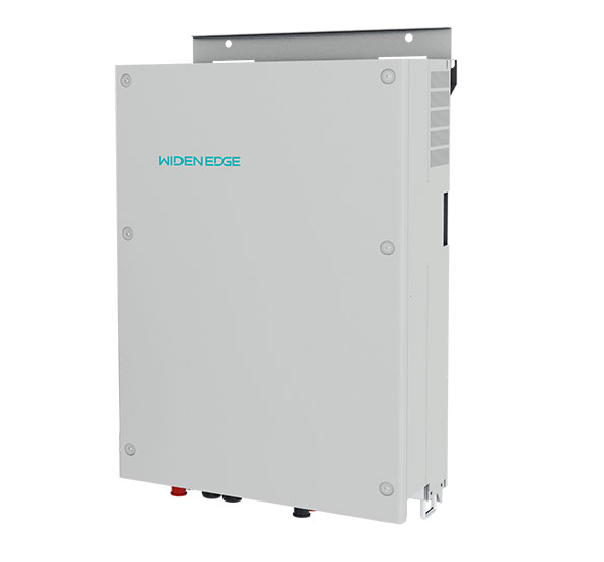
We believe the right supplier should therefore be judged by how its PCS behaves as part of the complete microgrid, not by its rated power or product brochure alone.
A permanently islanded microgrid needs a source that can establish and regulate the AC voltage and frequency. That immediately makes control architecture a more important selection criterion than simply comparing battery capacity or inverter efficiency.
We would first ask the manufacturer to explain how its PCS establishes the grid, regulates voltage and frequency, and responds to changes in active and reactive power. A grid-forming PCS should be evaluated according to its actual operating behavior rather than the presence of “grid-forming” in a product description.
The same question applies to startup. If the project requires black start, the supplier should describe the complete sequence: battery availability, PCS energization, auxiliary systems, load pickup, and subsequent synchronization of other sources. A capability statement without an operating sequence leaves too much uncertainty for an EPC.
An off-grid system can experience large load changes that would be absorbed by a much larger utility network in a grid-connected project. Motor starting, switching of industrial equipment, or sudden connection of critical loads can therefore expose weaknesses in the control strategy.
We recommend asking manufacturers to discuss representative load-step conditions rather than providing only steady-state specifications. The useful questions concern how quickly the PCS responds, how voltage and frequency are controlled, and how other sources are prevented from fighting the battery inverter.
Load behavior also affects PCS sizing. A system designed around average demand may perform very differently from one exposed to short-duration peaks or repeated transients. The manufacturer should understand the project's actual load profile before recommending a PCS configuration.
Solar and wind generation can change faster than the site's demand. In renewable energy microgrids, that variability has to be absorbed somewhere, and the PCS often becomes a major balancing element between generation, storage, and loads.
We would therefore examine how the proposed system manages excess renewable generation, declining renewable output, battery charging limits, and state-of-charge constraints. The discussion should include what happens when the battery cannot accept additional power or when renewable generation suddenly falls.
A capable supplier should also be able to explain how its PCS interacts with renewable converters. The objective is not simply to keep the battery within its limits. The objective is to maintain a stable electrical environment while power sources continuously change.
A PCS does not operate alone. Its behavior can depend on the EMS, microgrid controller, PV inverter, diesel generator, protection system, and communication network. For that reason, we would ask the manufacturer to review the complete control hierarchy before final equipment selection.
Particular attention should go to command ownership. Who controls active power? Who establishes frequency? Which device manages generator dispatch? What happens if communications are interrupted? Clear answers reveal whether the proposed architecture has been engineered or merely assembled from compatible components.
This is where experience across microgrid projects becomes valuable. WidenEdge works with PCS and energy-storage solutions for applications including off-grid and weak-grid environments, supporting EPC contractors and system integrators with product and technical requirements.
A manufacturer can satisfy a datasheet comparison and still create significant project risk. We prefer to move the evaluation toward evidence that resembles the intended installation.
Factory acceptance testing should reflect the project's important operating modes where practical. Test discussions can cover island operation, load changes, renewable generation variation, generator coordination, protection interactions, and recovery from abnormal conditions. The exact test program should follow the project's architecture and contractual requirements.
Documentation matters as well. Ask for applicable test reports, certifications, control descriptions, communication interfaces, installation requirements, and commissioning procedures. Project teams should verify that the evidence applies to the proposed PCS configuration and destination market rather than assuming that a certificate or test result covers every variant.
Technical support becomes particularly important once an off-grid project reaches commissioning. A PCS supplier may provide excellent hardware but still be difficult to work with if responsibility for system-level problems is unclear.
Before selecting a supplier, we would identify who will handle parameter development, factory testing, site commissioning, troubleshooting, and post-commissioning support. The buyer should also understand which tasks remain with the EPC or microgrid controller supplier.
For project teams comparing microgrid companies, this distinction can be decisive. A manufacturer that participates in architecture discussions and understands the interaction between storage, generation, controls, and loads can reduce the number of unresolved interface issues reaching the site.
The final decision should come from the project's most difficult operating conditions, not from the easiest specification to compare. A PCS manufacturer deserves preference when it can demonstrate that its equipment will establish a stable electrical reference, respond predictably to disturbances, coordinate with other sources, and remain supportable throughout commissioning and operation.
Our selection process therefore puts system behavior ahead of headline specifications. We look at what the PCS must accomplish under the site's real operating sequence, then determine whether the manufacturer's controls, engineering resources, testing approach, and support structure can deliver it.
That perspective is especially relevant to renewable energy microgrids, where changing generation and limited storage headroom can make control interactions more demanding.
Among microgrid companies, the strongest candidate is not necessarily the one with the lowest quotation or largest product range. It is the one that can demonstrate a credible path from electrical requirements to stable operation.
Ultimately, choosing the right PCS manufacturer is an exercise in reducing uncertainty. We would select the supplier that can explain its control behavior, validate it against project conditions, and take responsibility for the engineering interfaces that determine whether an off-grid microgrid works as intended. WidenEdge takes this system-oriented view when supporting PCS and energy-storage projects for demanding grid environments.
Return