A high-quality off-grid inverter should deliver a stable AC waveform, but what THDu number actually demonstrates that quality? For B2B buyers, the answer cannot simply be the lowest figure printed on a datasheet.
Total harmonic distortion of voltage depends on the inverter, connected load, operating point, measurement method, and system configuration. A useful expectation is therefore a combination of a low THDu target and transparent test conditions.
THDu, or total harmonic distortion of voltage, expresses the harmonic content of an AC output relative to its fundamental voltage. Lower distortion generally means the inverter is producing a waveform closer to the intended sinusoidal output.
IEC terminology defines THD as the RMS contribution of harmonic components relative to the fundamental component.
For standalone PV systems, waveform quality deserves particular attention because the inverter is establishing the local AC supply rather than simply following an already-established utility waveform. IEC 62109-2 applies to PV inverters including stand-alone and multiple-mode equipment, as well as systems used with batteries.
There is no single universal THDu value that defines every high-quality pv off grid inverter. Nevertheless, below 5% voltage THD under specified test conditions is a useful engineering benchmark for buyers seeking a clean AC output. A lower value, such as around 3%, provides additional margin where sensitive loads or demanding power-quality requirements are involved.
We should distinguish that practical benchmark from a formal product requirement. A recently published IEC draft requirement for stand-alone inverter sinusoidal output specifies total harmonic voltage distortion of no more than 10%, together with limits on individual voltage harmonics, under defined test conditions. The existence of such a ceiling does not mean 10% should be the purchasing target.
That distinction matters. A product can remain within a stated maximum while delivering a waveform that is less desirable for a demanding microgrid. Our view is that buyers should ask manufacturers for measured THDu data and test conditions rather than treating regulatory or safety limits as evidence of premium waveform performance.
THDu cannot be evaluated fairly without knowing how the measurement was made. Load type, output power, DC input condition, voltage level, frequency, and harmonic measurement bandwidth can all affect the reported result.
The stand-alone inverter testing framework referenced in IEC 62109-2 evaluates output voltage distortion at multiple load levels rather than relying on a single operating point. The draft requirements identify testing around low, half, and full continuous rated output with a resistive load.
Consequently, a headline figure without test conditions has limited procurement value. We recommend asking whether the quoted THDu represents resistive loading, nonlinear loading, rated output, partial load, or another defined condition. Comparing two products only becomes meaningful when their measurement methods are reasonably comparable.
An off-grid system may supply equipment whose electrical behavior is very different from a simple resistive load. Motors, variable-speed drives, UPS systems, switching power supplies, communications equipment, and other power-electronic loads can interact with the inverter's output waveform.
That interaction makes waveform quality a system-level issue. Harmonic distortion can contribute to additional electrical stress and can complicate power-quality management when multiple nonlinear devices operate together. IEEE's power-quality resources likewise identify nonlinear loads and inverter-based distributed energy resources as important sources of harmonic distortion.
For this reason, we would not evaluate a 60kW off-grid PV inverter solely from its nominal power rating. The intended load profile should be part of the acceptance criteria. A facility with sensitive electronics has a different waveform-quality requirement from a remote site supplying mainly resistive heating or conventional loads.
A serious technical datasheet should make it possible to understand how its THDu claim was obtained. At minimum, buyers should look for the rated AC output, nominal voltage and frequency, measurement conditions, load type, operating power, and definition of the measured harmonic range.
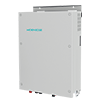
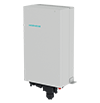
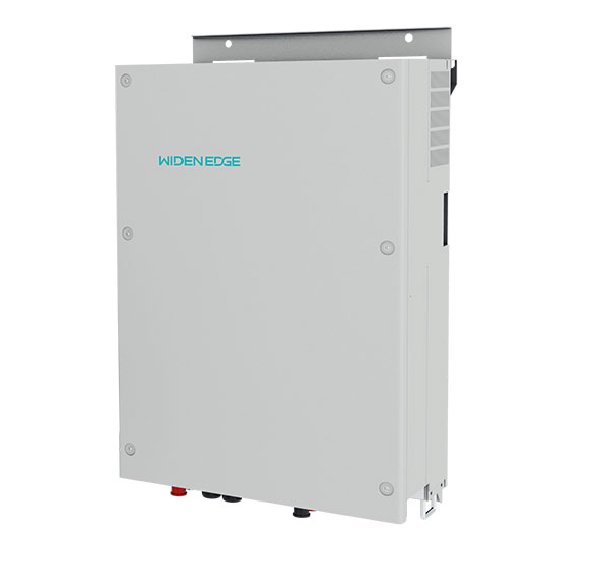
The product reference supplied for the 60kW platform describes the MGC 45/60kW as a PV-storage microgrid inverter designed for harsh conditions, including islands, dusty locations, and high humidity. It also specifies dual DC interfaces for simultaneous PV and battery connection, off-grid support for 100% single-phase unbalanced loads, and grid-forming control using VSG and droop control.
Those features are relevant because waveform quality cannot be separated completely from inverter operating behavior. Grid-forming controls, load imbalance, power conversion architecture, and overload behavior all influence how an off-grid system performs under changing conditions. However, the supplied product page does not publish a specific THDu value, so we should not assign one to the product without test evidence.
For procurement, our recommendation is straightforward: treat below 5% THDu as a useful practical target, regard lower values as desirable where the application demands tighter waveform quality, and verify exactly how the manufacturer measured the result.
A THDu figure becomes much more meaningful when paired with operating conditions and actual load requirements. For a 60kW off-grid PV inverter, we would also examine voltage regulation, frequency stability, overload behavior, unbalanced-load capability, and grid-forming performance rather than judging the AC output from THDu alone.
WidenEdge designs its MGC platform for PV-storage microgrid environments where stable off-grid operation is central to the system. The product's published specifications establish its grid-forming and unbalanced-load capabilities, while project-specific THDu verification should come from the applicable test documentation.
Ultimately, the best THDu expectation is not simply “as low as possible.” It is a consistently low, independently measurable value under clearly defined operating conditions that match the intended microgrid load. That is the standard we recommend using when comparing inverter proposals and approving equipment for demanding off-grid applications.
Return