A PV converter should not leave the factory simply because it powers up. Before shipment, a manufacturer should have evidence that the unit meets its electrical design, responds correctly to abnormal conditions, maintains safe insulation, and performs consistently under representative loading.
For B2B buyers, the important question is therefore not whether a factory performs “testing,” but whether its pre-shipment process can detect the failures most likely to affect field commissioning and long-term operation.
A disciplined release process starts with product identification and visual inspection, followed by controlled electrical and functional tests. The exact sequence depends on the converter design and applicable standards, but the principle is consistent: test results should demonstrate that the finished unit conforms to its approved design before it is packed.
IEC 62109-1, the general safety standard for power converters used in photovoltaic systems, includes thermal testing, single-fault testing, humidity preconditioning, backfeed protection, electrical ratings, and marking and documentation among its testing requirements.
We would also expect production testing to distinguish between routine checks performed on every unit and deeper design-validation tests performed during product qualification. A factory acceptance process should not imply that every production unit needs to repeat every laboratory qualification test, but each shipped unit should receive appropriate verification of its critical functions.
The first technical question is whether the converter operates correctly across its specified input and output conditions. A production test should verify startup, shutdown, input voltage behavior, output regulation, current response, and basic operating stability under defined conditions.
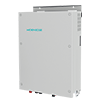
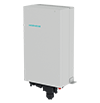
For a 15kW PV DC-DC converter, these checks are especially relevant because the unit sits directly in the PV power-conversion path. The supplied product information describes a wide-voltage design with dual-port output and stackable parallel expansion, so factory verification should reflect the operating envelope defined for the finished product rather than testing only at one convenient point.
Independent DC-DC converter testing guidance commonly includes input-voltage range, line regulation, output-voltage range, load regulation, transient response, ripple and noise, efficiency, and startup or shutdown behavior.
A useful factory test therefore asks two questions simultaneously: does the converter produce the specified output, and does it remain controlled when the input or load changes?
Electrical performance alone cannot establish shipment readiness. Insulation resistance and dielectric withstand testing are particularly important for power converters because insulation faults can create shock, fire, or equipment-damage risks.
IEC 62109-1 specifically addresses electrical shock, thermal and fire hazards, mechanical hazards, and other safety considerations for PV power converters. Its testing framework includes single-fault and thermal evaluation as well as insulation-related requirements.
The appropriate test voltage, duration, insulation limits, and acceptance criteria must come from the applicable design and safety requirements; they should never be invented as generic factory numbers. For higher-voltage PV architectures, insulation coordination becomes even more significant. Industry guidance notes that PV DC-DC converter isolation must be designed and tested according to system voltage, overvoltage category, and pollution conditions.
Grounding continuity, polarity, protective connections, and other safety-related interfaces should likewise be verified before release.
A protection feature listed on a datasheet has little value if the factory never verifies that it responds correctly. Pre-shipment testing should therefore challenge applicable protective functions under controlled conditions.
The supplied 15kW product information identifies multiple protections, including AFCT, string-current detection, insulation-resistance monitoring, and PV reverse-connection protection. Each applicable function should have a defined production or validation test method rather than being treated as a software checkbox.
The exact tests depend on the architecture. A manufacturer may need to verify abnormal input conditions, overcurrent response, reverse polarity detection, insulation alarms, shutdown behavior, and recovery logic. The objective is not to deliberately damage the unit, but to confirm that protective mechanisms recognize defined fault conditions and transition into their intended safe state.
This distinction is important for procurement. We should ask for evidence of functional verification rather than assuming that the presence of a protection feature proves its reliability.
Power converters can pass a basic startup check while still exhibiting thermal or control problems at meaningful operating power. Load testing provides a way to expose these issues before equipment reaches the project site.
A suitable factory procedure should operate the converter under defined load conditions and monitor relevant electrical and thermal parameters. Depending on the product design, that can include semiconductor temperatures, heatsink temperatures, output stability, current sharing, efficiency, alarms, and shutdown behavior.
IEC 62109-1 includes thermal testing as part of its safety framework, reinforcing why temperature behavior cannot be separated from equipment safety.
For a PV converter intended for difficult environments, testing should also reflect the manufacturer's specified operating conditions where practical. The referenced product is positioned for applications including islands and dusty environments and incorporates a high-protection design. Environmental claims should therefore be supported by the relevant qualification evidence rather than inferred from the product description.
The last step should be a controlled release review. Every shipped unit should be identifiable by serial number, with test results linked to the corresponding production record. Any failed test, repair, retest, or component replacement should be traceable through the manufacturer's quality process.
We recommend that buyers ask what the factory records for each unit, which tests are performed on every production unit, and which tests belong to type or design validation.
A useful quality package can include functional results, insulation or dielectric test records where applicable, protection verification, visual inspection, firmware or configuration identification, and final inspection status.
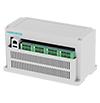
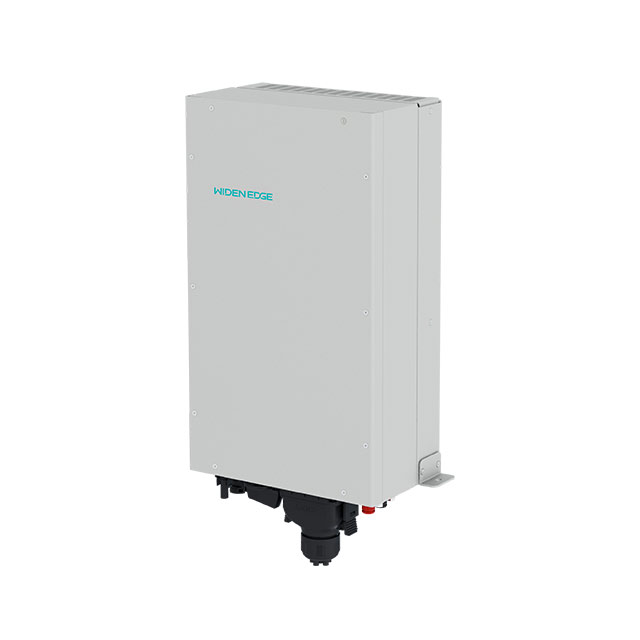
WidenEdge's 15kW PV/DC product is positioned around wide-voltage operation, dual-port output, stackable expansion, and multiple protection functions, making factory verification particularly relevant to the finished converter's intended operating role. 15kW PV/DC product information
We regard pre-shipment testing as the bridge between a converter's engineering design and its field deployment. WidenEdge's manufacturing approach should therefore be judged not by the number of tests listed in a brochure, but by whether each critical performance and safety requirement has a defined acceptance method and traceable result.
For buyers selecting a pv converter, the strongest question to ask is simple: What evidence will you provide that this exact unit passed its release tests? A credible answer should connect electrical performance, safety, protection, thermal behavior, configuration, and serial-level records. That evidence gives an EPC or system integrator far more confidence than a generic statement that the equipment was “factory tested.”
Return