A parallel microgrid changes the meaning of “local service.” With one converter, a field technician may be able to isolate a hardware fault directly. Several coordinated units introduce another layer: communication, synchronization, configuration, dispatch, and interaction between devices. A service provider therefore needs to understand the control system as a whole.
For buyers comparing suppliers, the useful question is not simply which company has an office nearby. The better question is whether that supplier can diagnose a parallel system, identify the correct failure layer, and bring the right engineering resources into the problem quickly.
The first comparison should focus on the faults that can actually stop a project from operating correctly.
A parallel microgrid may involve several PCS units, a supervisory microgrid controller, BMS interfaces, communication networks, meters, and external control signals. A problem that appears to be a controller failure could instead originate from an addressing error, communication interruption, incompatible configuration, or a problem inside one connected PCS.
That means local support should be capable of troubleshooting interactions, not merely replacing hardware. We would ask prospective suppliers for examples of the diagnostic information their technicians can interpret and which problems can be resolved remotely versus requiring site intervention.
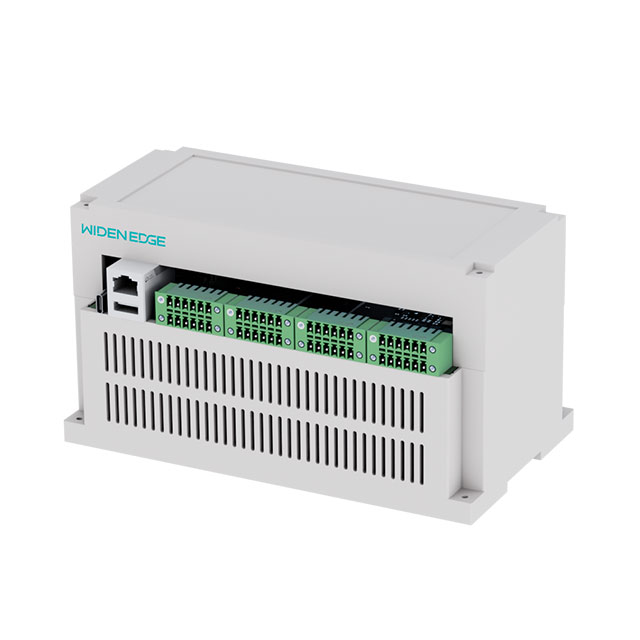
Our Hub coordinates up to 32 MGC units in parallel and uses high-speed communication for coordinated control. Its architecture also supports Web UI access and software upgrades. Those capabilities make technical diagnosis an integral part of service rather than an optional after-sales function.
A supplier may have excellent inverter technicians but limited expertise in supervisory control. That distinction matters.
The controller sits between the power-conversion equipment and the wider microgrid logic. It may need to coordinate operating states, receive information from multiple devices, and communicate through different protocols. The supplier's service team should therefore understand the controller, connected PCS units, BMS interfaces, and communication architecture as one operating system.
Our Hub supports CAN communication at 1 MHz and works with Sunspec, Modbus TCP, and Modbus RTU transmission. It also provides configurable BMS protocol access for multiple BMS groups.
During supplier evaluation, we would ask whether local engineers can troubleshoot these interfaces themselves or must forward every technical case to headquarters. A local phone number has limited value if the actual diagnosis always depends on a distant engineering team.
Suppose a parallel system fails to follow a dispatch command. A local technician might confirm wiring and restart the equipment, yet the underlying problem could involve software parameters or communication timing. If the local team cannot escalate the case with the correct logs, configuration files, and operating history, several days can disappear before the right engineer sees the problem.
We therefore recommend comparing the escalation process itself. Ask who receives the first fault report, what information must be collected, who has authority to change configuration, and how the case moves from field service to product engineering.
A supplier should also define how urgent failures are prioritized. A commissioning issue, a non-critical monitoring alarm, and a complete loss of coordinated operation should not necessarily enter the same support queue.
One company may maintain engineers in the project country. Another may rely on a distributor. A third may offer remote support during regional business hours but send specialists internationally when physical intervention is required. All three can describe their model as local support.
For a B2B buyer, the distinction should be made explicit in the tender. Ask where the service personnel are located, what they are authorized to troubleshoot, whether spare equipment is locally available, and which issues require manufacturer escalation.
We also look at the supplier's remote-service architecture. A controller with Web UI access and remote software-upgrade capability can reduce the number of problems that require a physical visit, provided the technical team can use those functions effectively.
Rather than assigning points for phrases such as “24/7 support” or “global service,” we would request a defined support matrix. It should identify response expectations, escalation contacts, remote diagnostic capability, field-service arrangements, software-update procedures, and documentation available to the project team.
Commissioning support deserves separate attention. Ask whether the supplier will participate in controller configuration, communication checks, parallel-unit testing, and system-level functional verification. Those activities reveal whether the service organization understands the product beyond its sales specifications.
Post-commissioning support should also be defined. Software changes, configuration revisions, and future expansion can affect a parallel system differently from a standalone unit. A service plan should explain how version control and technical compatibility will be handled.
The strongest supplier is not necessarily the one with the closest office. The better choice is the one whose support model matches the consequences of a controller failure.
For a small installation with limited operational impact, remote troubleshooting and distributor assistance may be sufficient. A larger industrial microgrid with several coordinated converters may justify direct manufacturer engineering support because one control problem can affect multiple power-conversion units simultaneously.
Our approach is to evaluate service as part of the system architecture. If the controller coordinates up to 32 MGC units, communication and configuration become operational dependencies, not secondary features.
WidenEdge therefore treats technical support as an extension of the control platform. The relevant question during procurement is whether the supplier can maintain the complete control chain, from field signals and communications to coordinated PCS behavior.
For buyers comparing a parallel controller, we recommend documenting the service model before awarding the project: who responds, where they are located, what they can diagnose, how escalation works, and what happens when the problem involves several connected devices.
WidenEdge's Hub illustrates why this broader view matters. Its parallel coordination, communication interfaces, Web UI, and software-upgrade functions create a system that needs technically informed support throughout its operating life.
Ultimately, local service should be measured by technical reach and escalation capability, not geographical proximity alone. When a parallel microgrid depends on coordinated control, the value of a supplier's service organization lies in how quickly it can turn an ambiguous field problem into an identified, actionable engineering solution.
Return