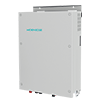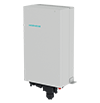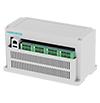
At mining extraction sites, electrical hardware is subjected to harsh particle loads that can overcome traditional enclosures in a matter of months. The presence of fine mineral dust, which functions as a blanket of abrasiveness, brings to the breakdown of thermal insulation within power conversion units.
Sourcing a conversion unit for these harsh locations demands a radical shift from standard industrial specifications. Ignoring atmospheric reality leads to catastrophic field failures and expensive production halts.
At WidenEdge, our engineering deployments inside remote mineral zones reveal that standard cabinets cannot withstand relentless silica bombardment. Building reliable off grid energy storage systems requires a fundamental redesign of physical barriers and thermal pathways.
Evaluating hardware suitability starts with understanding how particulate matter bypasses standard seals. Comprehensive testing ensures reliable uptime under severe conditions.
Microscopic dust particles enter standard industrial enclosures through tiny gasket seams, ventilation louvers, and cable entry points. Once inside, conductive mineral deposits settle on printed circuit boards, creating low-resistance leakage paths that trigger arc faults. Preventing this internal contamination requires high-grade ingress protection backed by multi-stage labyrinth sealing.
Standard IP54 ratings often prove insufficient when high-pressure washdowns or wind-driven tailing dust hit the cabinet exterior. Specifying an IP65 rating or higher ensures total protection against airborne dust and driving moisture jets.
Engineers must inspect how door hinges, compression latches, and gland plates maintain constant sealing pressure across severe temperature swings. Utilizing continuous-pour polyurethane gaskets prevents dust from finding micro-channels into high-voltage electronics compartments.
Physical defense must remain airtight without sacrificing technician access during routine maintenance intervals. Additional pressure compensation valves protect structural seals from blowing out during sudden temperature spikes.
Sealing an enclosure tightly to block dust creates an immediate thermal bottleneck for high-power semiconductor switching components. Traditional forced-air ventilation pulls ambient air straight across internal heat sinks, rapidly clogging fins with abrasive mineral dust. This particulate accumulation chokes thermal transfer efficiency, forcing the inverter to derate or shut down entirely.
Solving this thermal paradox requires adopting closed-loop liquid-to-air cooling architectures that completely isolate internal electronics. By routing internal heat through sealed liquid loops to external exchangers, sensitive circuitry remains untouched by external air.
Modern industrial off grid power systems increasingly rely on this isolation method to prevent dust buildup while maintaining safe junction temperatures during peak solar generation hours.
Where liquid cooling proves impractical due to site logistics, forced-air designs must feature automated reverse-purge capabilities. These purge cycles blast accumulated dust out of external heat sink fins at scheduled intervals, preserving cooling performance. Selecting the right thermal architecture dictates whether your power assets survive extreme summer ambient temperatures without compromising output ratings.
Underground drilling, massive rock crushers, and heavy hauling trucks generate constant low-frequency ground vibrations across mineral processing zones. These persistent mechanical shocks stress every internal busbar, fastener, and mounting bracket inside nearby power conversion enclosures. Unreinforced internal components quickly develop micro-fractures, leading to catastrophic electrical sparking and sudden system shutdowns.
Transporting equipment across unpaved mining access roads imposes severe transit shock loads before commissioning even begins. Cabinets must feature heavy-gauge structural steel frames and vibration-damping mounts designed to absorb severe mechanical impacts. Securing heavy internal magnetics and transformers prevents resonance frequencies from tearing apart internal wiring harnesses.
Verifying that structural chassis designs achieve strict seismic and shock resistant certifications is necessary in order to deploy power conversion hardware that is reliable. For any assembly that is going to be used in high-stress extraction zones, engineering teams are required to incorporate heavy-duty anti-vibration dampening right into the configuration.
In spite of years of continuous industrial hammering, this mechanical fortification guarantees that the electrical conversion process will continue without interruption. The utilisation of cutting-edge frame engineering ensures extended operational lifespans.
Mining grids experience violent load fluctuations driven by massive motor starts, conveyor belt surges, and heavy crushing machinery cycles. A conversion unit must possess exceptional transient overload capacity and robust grid-forming firmware to handle these rapid step changes. Units lacking dynamic headroom will experience severe voltage sags or trigger emergency protective trips during heavy motor acceleration.
Integrating intermittent renewable generation alongside local diesel generators demands seamless source synchronization without bus voltage collapse. Advanced control algorithms must manage rapid power shifts smoothly while maintaining strict frequency and voltage stability across the microgrid. Software adaptability is just as critical as raw physical durability when managing erratic industrial loads.
Deploying advanced off grid energy storage systems transforms remote mining operations by stabilizing volatile renewable inputs and lowering diesel fuel consumption.
Selecting specialized hardware ensures long-term operational resilience and protects capital investments from premature environmental burnout. Rigorous engineering foresight transforms volatile remote microgrids into stable, highly productive energy ecosystems that operate reliably for decades.
Return