Choosing a battery inverter for a remote mine is fundamentally different from selecting one for a conventional commercial building. A mine may operate far from utility infrastructure, face difficult environmental conditions, and depend on continuous power for pumps, ventilation, communications, processing, accommodation, and other critical loads. A failed inverter can therefore become an operational problem rather than simply an equipment fault.
The right off grid energy storage systems architecture should begin with the site's electrical mission. We need to know which loads must remain energized, how the battery will interact with generators and renewable generation, and whether the inverter must establish the local AC grid itself.
Remote mining projects cannot assume that a utility network will provide a stable voltage and frequency reference. The inverter may instead become one of the most important control elements in the site's electrical system.
A battery inverter should therefore be evaluated according to its operating mode. If it only follows an existing AC source, it may not be suitable for a fully islanded mine. Grid-forming control is more relevant when the battery system must establish voltage and frequency and coordinate other generation sources.
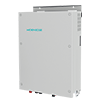
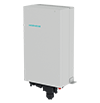
WidenEdge's MGC platform uses grid-forming control based on VSG and droop control, with seamless switching between grid-following and grid-forming modes. The product architecture is intended for microgrid and off-grid applications where stable operation must continue without dependable grid support.
That distinction should be established before comparing efficiency figures or cabinet dimensions.
Average site demand can be misleading. Mining facilities may contain pumps, compressors, motors, crushers, HVAC equipment, and other loads with starting or transient requirements substantially different from their steady-state consumption.
We would therefore begin sizing from the critical-load list and operating scenarios. Determine continuous demand, peak demand, motor-starting requirements, phase imbalance, and the amount of overload capacity required during short-duration events.
The inverter architecture should also accommodate the actual distribution system. WidenEdge's off-grid solution uses a transformerless three-phase four-wire design and supports 100% single-phase unbalanced loads. It specifies 1.5-times overload capability for three seconds.
Such specifications are useful only when they match the mine's electrical profile. A converter that looks sufficiently large on paper may still be unsuitable if its transient capability or unbalanced-load performance does not match the site's worst operating condition.
Mining locations can expose electrical equipment to dust, humidity, temperature variation, and difficult maintenance conditions. An inverter selected for a clean indoor plant should not automatically be assumed suitable for a remote mine.
Enclosure protection is therefore part of the equipment-selection process. The WidenEdge off-grid solution specifies IP65-rated core components and is designed for demanding environments including dusty sites and islands.
We would also examine cooling arrangements, filter maintenance, cable-entry protection, installation altitude where relevant, and physical access. These details affect whether the inverter can continue operating reliably after months of exposure rather than merely whether it passes an initial commissioning test.
Environmental suitability should be assessed together with the mine's maintenance resources. A highly protected enclosure is useful, but the project still needs a practical method for inspecting, servicing, and replacing equipment.
Battery storage can serve several functions at a mine. It may provide backup energy, absorb renewable fluctuations, reduce generator loading, or establish the AC reference for an islanded microgrid.
That last role changes the inverter requirement substantially. A grid-forming battery inverter can provide voltage and frequency regulation for an islanded network, while coordinated controls can manage other resources such as PV and diesel generators.
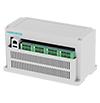
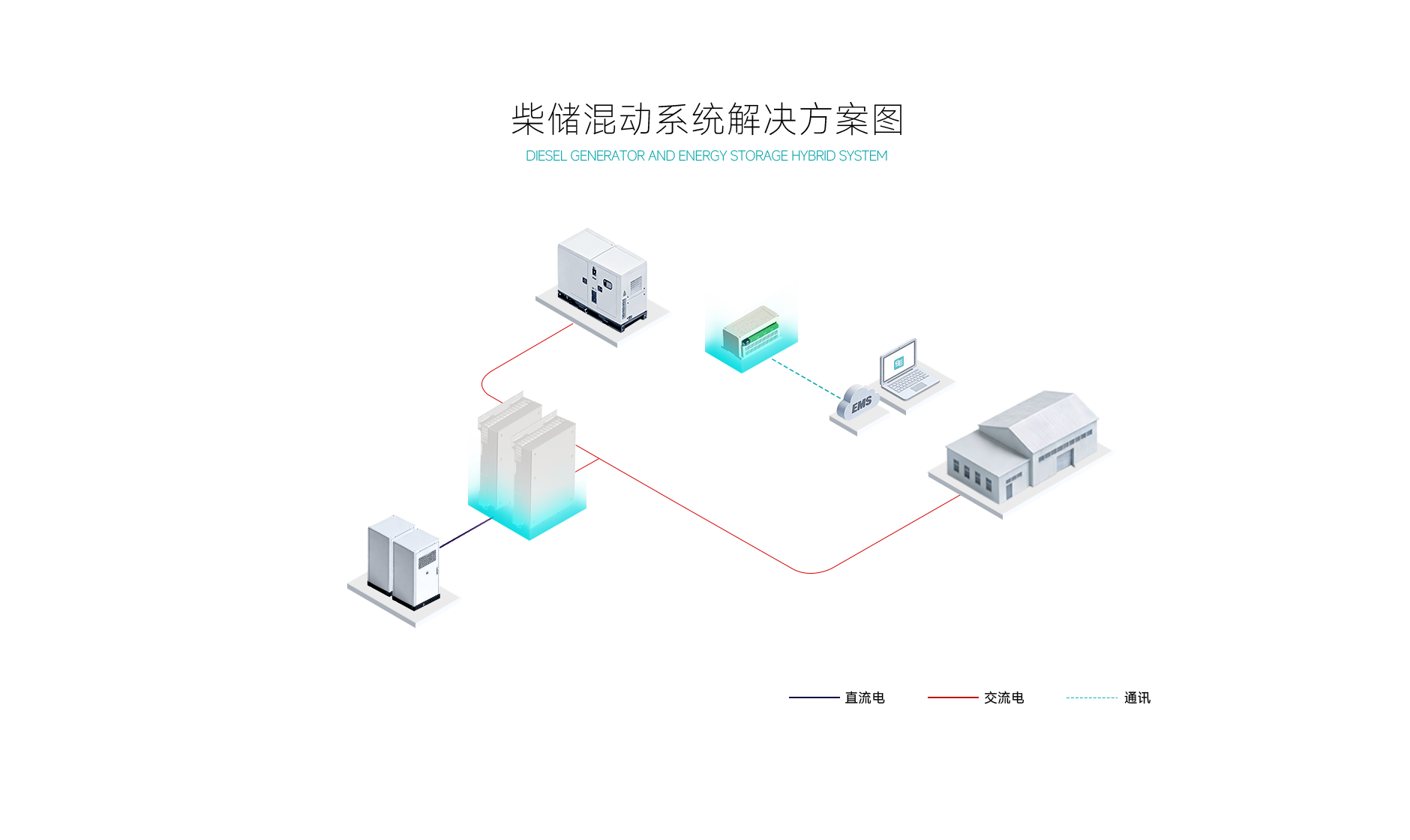
The MGC MK1 platform incorporates automatic diesel-generator control, diesel parameter self-learning, automatic load-fluctuation control, and a built-in synchronization interface. These functions illustrate why a remote mining inverter should be evaluated as part of the control architecture rather than as a standalone battery interface.
For projects using remote area power supply systems, we would define the battery's role first: backup, peak support, renewable smoothing, generator optimization, grid formation, or a combination. That role determines the control capabilities the inverter must provide.
Many remote mines use diesel generation alongside renewable generation and batteries. The inverter must therefore coexist with generators without creating unwanted power flows or unstable operating conditions.
Generator coordination becomes particularly important when battery power changes quickly while the diesel set is operating. The system should define how generation is dispatched, how load changes are handled, and what happens during transitions between generator-supported and battery-supported operation.
Expansion should also be considered early. The WidenEdge off-grid architecture supports up to 32 units in parallel operation, allowing projects to use standardized products as power requirements increase.
For a mine expected to expand production, modular PCS deployment can provide a practical path for increasing conversion capacity. The decision should nevertheless account for parallel control, protection coordination, communications, and available installation space.
Remote mining projects turn serviceability into an engineering requirement. Equipment that is difficult to access or diagnose can create disproportionate downtime when the nearest specialist or spare part is far away.
We would therefore evaluate remote monitoring, fault records, software maintenance, spare-parts strategy, physical access, and technical support before finalizing the inverter.
A supplier's ability to provide ongoing remote maintenance and software updates can be particularly relevant where travel to the site is difficult. WidenEdge describes regular remote maintenance, software updates, and a 24-hour response mechanism within its service offering.
Our selection process would ultimately rank the inverter against five practical questions: Can it form and stabilize the site's electrical network? Can it handle the mine's worst load conditions? Can it survive the environment? Can it coordinate with diesel and renewable generation? Can the project team maintain it remotely and locally?
WidenEdge develops grid-forming power-conversion systems for off-grid, weak-grid, and hybrid microgrid applications, making that system-level approach central to our equipment selection philosophy.
The strongest off grid energy storage systems choice is therefore not necessarily the inverter with the highest nominal power or the longest feature list. It is the platform whose electrical behavior, environmental protection, control architecture, expansion path, and service model match the mine's actual operating conditions.
For remote area power supply systems, we recommend specifying the critical loads and operating scenarios first, then selecting the battery inverter around those requirements.
That sequence gives EPCs and mine operators a much stronger basis for comparing suppliers and reduces the risk of discovering an architectural limitation only after equipment reaches the site.
Return