
Weak commercial grids expose problems that may remain invisible in a conventional grid-connected storage project. Voltage can fluctuate, grid strength can be limited, and critical loads may react sharply to disturbances. A PCS therefore has to do more than exchange active power with the battery.

Successful SiC grid-forming projects tend to share a different design philosophy: the PCS is selected for how it behaves under weak-grid conditions, not simply for its nominal efficiency or power rating. For commercial and industrial energy storage, that means evaluating power electronics, controls, load behavior, and operating transitions as one system.
A grid-following inverter normally depends on an existing voltage and frequency reference. A weak grid can make that reference less robust, particularly when the network has low short-circuit strength or a high share of inverter-based resources.
Grid-forming inverters take a different role by establishing and regulating a voltage reference. INL describes grid-forming inverters as devices that autonomously set and maintain grid frequency and voltage, with potential benefits for low-inertia and weak-grid systems.
That distinction is central to successful projects. A commercial storage installation cannot be judged solely by whether its battery can charge and discharge. Engineers need to understand how the PCS responds when the grid becomes unstable, loads change rapidly, or the system needs to transition between operating states.
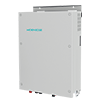
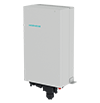
Our commercial solution is designed around a transformerless three-phase four-wire architecture, supports 100% unbalanced three-phase loads, and provides seamless grid-connected/off-grid switching. The published design also specifies 1.5-times overload for three seconds.
These characteristics address conditions that can become particularly important at commercial facilities where storage may serve peak shaving while also supporting critical loads.
Silicon carbide does not automatically make a project successful. Its value appears when the power stage and control system can take advantage of the device technology.
SiC power semiconductors can support higher-frequency switching and lower losses in appropriate converter designs. Infineon identifies SiC technology as an enabler for high-performance PCS designs, including reduced losses and high power-density architectures.
For grid-forming operation, that matters because the PCS is continuously managing voltage and power rather than simply following an established waveform. Faster switching and efficient power conversion can provide useful design headroom, but the resulting system performance still depends on control algorithms, thermal design, current limits, and the complete power stage.
Recent commercial storage products are increasingly combining SiC power electronics with grid-forming capabilities, reflecting the industry's move toward storage systems that provide active grid-support functions rather than energy shifting alone.
The strongest commercial energy storage solutions therefore treat SiC as part of a coordinated architecture. The semiconductor technology supports the converter; it does not replace sound grid-forming engineering.
A successful project needs grid-forming control that remains useful during actual disturbances. Voltage and frequency regulation are only the starting point.
Weak-grid storage may need to respond to sudden load changes, support voltage, manage reactive power, and maintain stable operation during transitions. Grid-forming systems can also support functions such as black start and fault ride-through, although these capabilities depend on the overall system design and available current.
Sandia notes that grid-forming battery systems face important control and DC-side challenges, including scalability and the interaction between batteries and the point of common coupling.
That is why project validation matters. Engineers should examine not only whether “grid-forming” appears on a datasheet, but also how the PCS handles transitions, current constraints, overload events, and interaction with the site's grid.
Our solution supports seamless grid-connected/off-grid switching while retaining critical loads, a function that directly connects PCS control with commercial continuity requirements.
For commercial and industrial energy storage, this system-level behavior is often more important than an isolated efficiency figure.
A PCS may perform well under balanced, predictable loads yet behave differently when the facility contains large single-phase loads, motors, or rapidly changing demand.
This is why successful weak-grid projects begin with load characterization. Engineers should understand the site's load balance, peak demand, reactive-power behavior, motor-starting events, and critical-load requirements before finalizing PCS control settings.
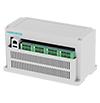
Our published solution supports single-phase 100% unbalanced loads and integrates external current and voltage sampling for real-time load monitoring.
That architecture is relevant to commercial facilities because a theoretical three-phase load profile may not reflect what actually happens at the connection point. A storage system that sees the real load behavior can be configured more appropriately than one designed around simplified assumptions.
The same principle applies to data centers, hospitals, industrial parks, and commercial centers. The application list for our solution includes these environments, where continuity and predictable power behavior can be important operating requirements.
The common thread among successful projects is not simply the use of SiC. It is the alignment of the PCS with the grid, loads, battery, and operating strategy.
We would evaluate five areas before approving a weak-grid storage design: the actual grid strength, grid-forming control behavior, transient and overload capability, load characteristics, and the transition between grid-connected and islanded operation.
Scalability also deserves attention. Our solution supports up to 32 units in parallel, allowing the power-conversion architecture to expand beyond a single PCS when project requirements increase.
That modular approach can be valuable, but parallel operation must still be engineered around coordinated controls, communication, protection, and power sharing.
At WidenEdge, we see the strongest projects as those where the PCS is specified around the actual electrical problem. SiC can provide a strong power-electronics foundation, while grid-forming control gives the storage system an active role in maintaining the electrical environment. Neither should be evaluated separately from the site's loads and grid conditions.
Ultimately, successful commercial energy storage solutions in weak grids have one thing in common: they are engineered for the conditions that will challenge the inverter, not the conditions that make the datasheet look simple.
When SiC power conversion, grid-forming controls, transient capability, load characteristics, and system integration are considered together, the PCS becomes a practical grid-support asset rather than simply a battery interface.
Return