
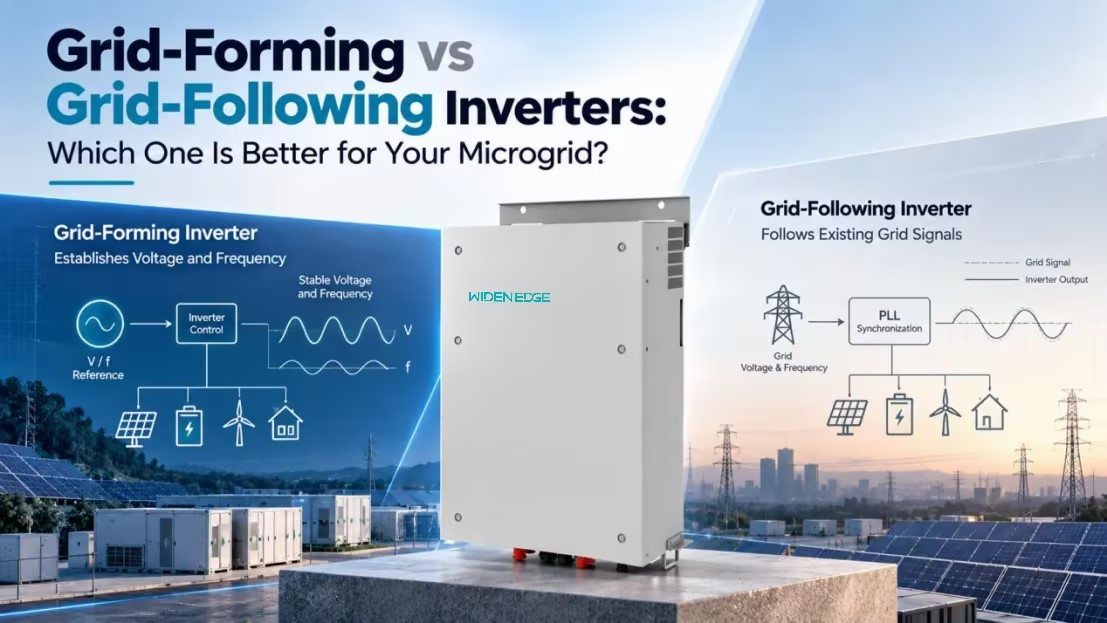
A grid-forming inverter operates as the primary power source to establish the voltage and frequency of a microgrid. This means it creates a stable electrical environment entirely on its own. Because it builds the local grid from scratch, it does not rely on an external utility grid to function.
A grid-forming inverter works by actively regulating the microgrid through its internal controller. First, the inverter controller creates an internal voltage and frequency reference point. Next, it uses this reference to regulate the microgrid directly. Therefore, the inverter acts like a traditional generator to balance energy supply and demand instantly.
Unlike grid-forming inverters that create their own electrical environment, a grid-following inverter requires an existing power grid to operate. It acts strictly as a supporting device rather than a primary power source. Therefore, it simply follows the voltage and frequency signals already established by the main utility grid to safely deliver energy.
Because it relies entirely on an external grid, this inverter must synchronize its output before injecting power. First, a control component called a Phase-Locked Loop detects the existing voltage and frequency of the main grid. Once it detects these signals, the inverter aligns its own output to match them and safely injects power into the system.
Grid dependency refers to whether an inverter requires an external utility power source to operate. Therefore, understanding this concept helps you determine if your microgrid can survive a power outage and guarantee continuous energy for your facility.
System stability is the capacity of an inverter to manage and correct voltage and frequency fluctuations. Consequently, evaluating this factor allows you to protect sensitive electrical equipment and prevent costly, unexpected power disruptions.
This criterion defines how effectively an inverter manages variable power from solar and wind generation sources. As a result, knowing this enables you to safely maximize your renewable energy deployment and achieve higher long-term cost savings.
Black start capability is the technical ability to restart a completely dead power system without any outside help. This means evaluating this feature ensures your facility has absolute energy resilience and can recover immediately from total grid failures.
The control approach describes the internal software mechanism that an inverter uses to interact with the electrical network. Furthermore, clarifying this technical aspect helps you select compatible microgrid controllers and accurately forecast your project engineering costs.
Comparison Table: Grid-Forming vs Grid-Following Inverters
|
Comparison Criteria |
Grid-Forming Inverters |
Grid-Following Inverters |
|
Grid Dependency |
Operates independently as the primary power foundation to establish a local network |
Requires an active utility connection to operate safely |
|
System Stability |
Provides synthetic inertia to absorb sudden shocks and dampen fluctuations |
Disconnects or trips offline when fluctuations exceed safe operational limits |
|
Renewable Energy Integration |
Balances solar and wind systems without requiring traditional diesel generators |
Requires traditional rotating generators on the network to maintain balance |
|
Black Start Capability |
Actively pushes power into a de-energized microgrid to initiate system startup |
Must detect existing power flow before waking up and injecting energy |
|
Control Approach |
Actively sets and dictates the voltage and frequency targets as a voltage source |
Injects active and reactive power by following external targets as a current source |
Grid-following inverters remain valuable for grid-connected applications because they offer a straightforward energy solution for highly stable environments. They rely entirely on external grid signals, allowing facilities to offset daily electricity consumption efficiently at a lower initial cost.
However, their complete dependence on the utility grid limits their ability to provide backup power during outages. Therefore, they remain the standard choice for conventional commercial projects that do not require independent energy resilience.
Grid-forming technology is becoming essential for renewable-dominated microgrids to guarantee continuous system stability. These inverters actively correct voltage and frequency fluctuations to prevent unexpected equipment disconnections during network disturbances.
Consequently, they supply the necessary synthetic inertia to manage high levels of variable solar and wind energy safely. This advanced capability allows critical infrastructure and isolated facilities to achieve energy independence and operate reliably without traditional diesel generators.
The future of microgrid design is likely a hybrid architecture that balances system resilience with capital efficiency. Large-scale energy networks can integrate both inverter types to optimize overall project costs while ensuring operational security.
In these configurations, project developers deploy a specific capacity of grid-forming units to establish the local voltage reference and provide black start capabilities. Concurrently, they utilize standard grid-following inverters for bulk power generation, making the grid-forming units the critical technical enabler that keeps the entire hybrid system online.
Understanding these technical differences helps you choose the right inverter for your specific project. Because each technology handles grid stability differently, they naturally fit distinct real-world applications.
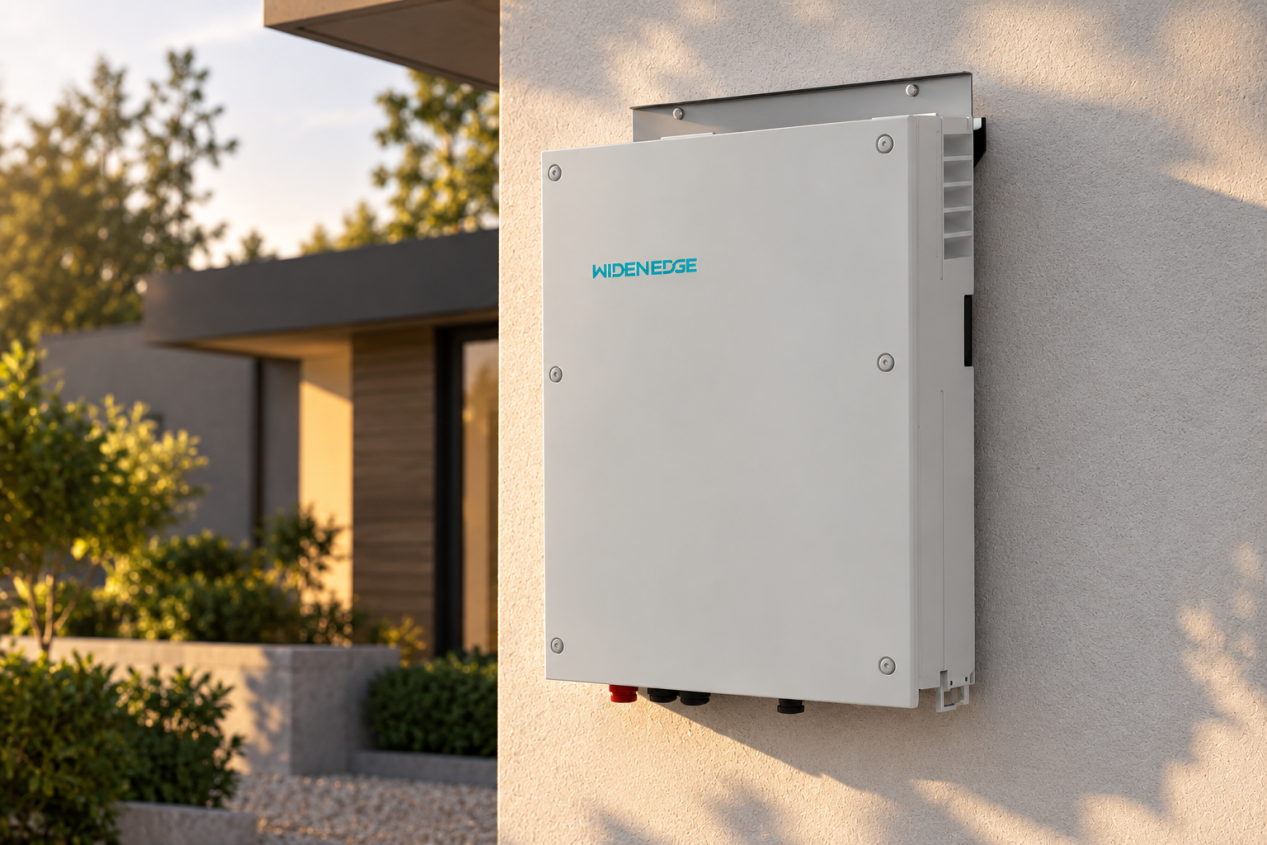
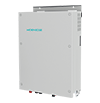
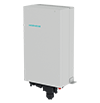
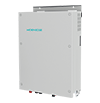
When it comes to grid-forming microgrid solutions, WidenEdge pairs dedicated hardware with system-level coordination. As part of WidenEdge's 30–600 kW full-SiC grid-forming PCS portfolio, the MGC-MK series is purpose-built for microgrid applications, using grid-forming control with VSG and droop algorithms to enable seamless switching between grid-connected and off-grid modes.
Its high-protection design withstands harsh environments, while high overload capability and 100% unbalanced load support in off-grid mode ensure robust operation. Built-in diesel generator self-learning further simplifies hybrid system management.
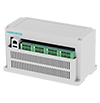
To coordinate multiple units at scale, the Hub microgrid controller synchronizes up to 32 MGC units in parallel, delivering millisecond-level response (under 10 ms) and compatibility with mainstream industrial protocols such as SunSpec, Modbus TCP, and Modbus RTU.
Together, MGC-MK and Hub form an integrated power conversion and control platform — backed by WidenEdge's track record of 15,000+ PCS units delivered across 15+ countries.
Choosing between grid-forming and grid-following inverters ultimately depends on your microgrid's stability needs, renewable energy share, and resilience goals — and increasingly, the best answer is both, working together in a hybrid architecture.
WidenEdge's MGC-MK grid-forming PCS and Hub controller give developers a proven, integrated platform for islanded, weak-grid, and hybrid microgrid projects. Ready to design a more resilient microgrid? Contact WidenEdge today to discuss your project needs.
Not always. Some newer inverter platforms may support grid-forming functions through software updates, while others require hardware replacement or additional power conversion equipment. For microgrids that need grid-forming capability, dedicated solutions such as WidenEdge MGC can provide grid-forming PCS functionality for grid-connected, weak-grid, and off-grid applications.
In today's mainstream applications, grid-forming PCS are typically paired with battery energy storage systems. Batteries provide fast and controllable power support for voltage and frequency regulation. In a complete microgrid solution, the grid-forming PCS handles power conversion and grid support, while the controller coordinates system operation. WidenEdge MGC is designed for energy storage and grid-forming operation, with WidenEdge Hub providing coordinated control of multiple MGC units.
The selection depends on factors such as grid conditions, islanding requirements, renewable energy penetration, scalability, and control architecture. For complex systems integrating solar, storage, and other distributed energy resources, a complete solution may require both grid-forming power conversion and microgrid control capabilities. Products such as WidenEdge MGC and Hub are designed to support these integrated microgrid applications.
Return