Procuring industrial power electronics requires looking far beyond a basic unit price line item to understand true project viability. When requesting financial proposals for isolated microgrids or remote industrial sites, engineering teams need complete transparency. A professional commercial proposal must delineate every technical nuance, operational limit, and logistical requirement without exception.
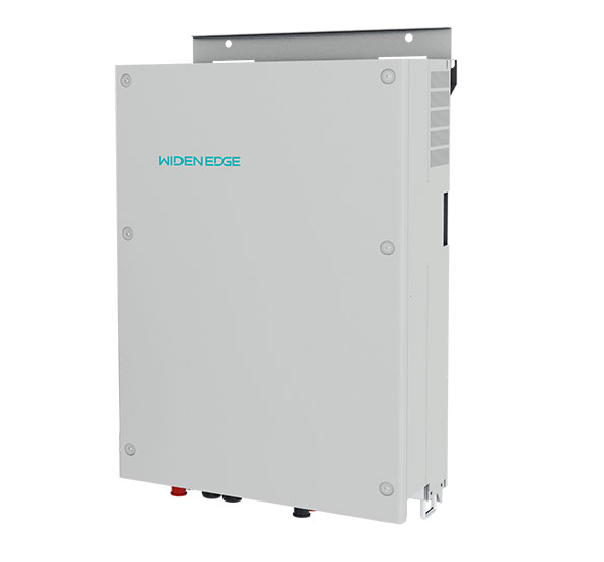
Without exhaustive itemization, hidden costs can quickly derail project budgets during critical deployment phases. Sourcing a mid-scale power conversion asset demands granular insight into what the final pricing document actually entails.
Project managers must evaluate how well potential suppliers account for site-specific electrical realities, environmental extremes, and long-term operational expenditures. Understanding these critical cost drivers ensures that your capital allocation remains secure from unexpected procurement pitfalls and operational delays.
The foundational element of any commercial pricing document is the precise technical description of the power conversion hardware. You must verify that the proposal explicitly outlines continuous AC output ratings, DC voltage windows, and overload capabilities across various operating temperatures and grid faults.
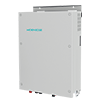
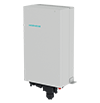
For a heavy-duty commercial deployment, a standard 150kW battery inverter must have its thermal derating curves and ambient temperature thresholds clearly documented.
Ambiguous descriptions regarding power factor ranges or apparent power limits leave room for costly post-signing disputes during commissioning. Vendors should detail semiconductor technologies, such as advanced Silicon Carbide modules, which directly influence conversion efficiency and thermal dissipation. Ensuring these baseline physical metrics are fully transparent protects your capital expenditure from unexpected performance bottlenecks later.
Furthermore, reviewing the exact topology helps engineers confirm compatibility with existing battery chemistry configurations without requiring expensive auxiliary interface equipment or external transformers.
Isolated electrical networks require specialized control algorithms rather than standard grid-following firmware architectures. Your quotation should explicitly state whether the unit supports true virtual synchronous generator operation, black-start functionality, and seamless islanded transitions under dynamic loads. In weak networks or standalone setups, an off grid solar inverter must handle severe load steps without tripping on harmonic distortion or voltage collapse.
Check if the pricing schedule includes advanced transient response software licenses or if those features incur extra licensing fees. A thorough proposal will specify short-circuit current injection capacities and fault ride-through performance metrics under low impedance conditions.
Demanding this level of technical depth ensures the hardware can survive hostile electrical environments without requiring expensive external mitigation equipment. Evaluating these control dimensions prevents operational failures when utility backups are completely unavailable during emergency contingencies.
When integrating a 150kW battery inverter, hardware delivery rarely stops at the main conversion cabinet; peripheral components dictate overall installation feasibility and safety.
Quotations must itemize associated balance-of-system items, including integrated DC combiners, AC distribution panels, communication gateways, and auxiliary power supplies. Enclosure ratings are another critical factor that must be explicitly detailed within the commercial document.
Whether your site demands NEMA 3R, IP55, or marine-grade anti-corrosion protection, the material specs must match local environmental realities. A vague line item for "cabinet assembly" invites inferior thermal management or substandard ingress protection ratings.
Insisting on explicit component branding for internal circuit breakers and surge protection devices guarantees long-term operational safety across the entire installation. Clear definitions regarding auxiliary transformer sizing and internal wiring standards prevent unexpected electrical bottlenecks during system integration.
Long-term financial planning relies heavily on understanding the exact terms of equipment warranties and post-sales support provisions. A professional cost proposal should define the standard warranty duration, typically ranging from five to ten years, alongside optional coverage extensions and performance guarantees. It must specify whether replacement units are shipped under expedited terms and whether firmware updates are included without recurring subscription costs.
Furthermore, check if recommended spare parts lists and specialized diagnostic tools are bundled into the initial capital expenditure or billed separately. WidenEdge approaches these support frameworks by ensuring complete transparency, minimizing unexpected maintenance overhead for project developers.
Clarifying these operational safeguards protects your long-term return on investment against unforeseen hardware failures or prolonged site downtime. Establishing clear lines of technical communication ensures rapid response times when troubleshooting complex grid interactions.
Logistical execution and site commissioning when deploying an off grid solar inverter represent significant variables that can easily distort initial budget forecasts if left ambiguous. Your pricing schedule must clearly define applicable Incoterms, whether Ex Works, Delivered Duty Paid, or Free Carrier shipping points.
Heavy power electronics require specialized transport, crane offloading, and rigging considerations that must be factored into the overall financial breakdown before signing.
Additionally, check if factory acceptance testing witnessing and on-site commissioning supervision are included or quoted as billable engineering days.
Clarifying travel expenses, accommodation fees, and local labor support ensures complete alignment between your procurement team and the equipment vendor. Transparent logistical planning prevents last-minute billing surprises during the final delivery phase of your project, safeguarding your overall timeline and budget integrity.
Securing a comprehensive pricing proposal requires diligence beyond comparing bottom-line acquisition figures across competing vendors. Every technical specification, control mode parameter, and logistical requirement must be meticulously examined before signing any binding contract.
By enforcing strict itemization for hardware capabilities, environmental enclosures, and warranty terms, project developers eliminate costly ambiguities and operational blind spots.
Thorough evaluation transforms a standard purchasing exercise into a secure foundation for long-term microgrid reliability and operational success. Navigating these complex financial structures ensures that your capital investments yield sustainable, resilient energy infrastructure capable of handling rigorous demands for decades of reliable commercial operation.
Return