Engineers modernizing distributed energy architectures constantly weigh material breakthroughs against practical deployment hurdles in modern power systems. Silicon carbide technology has fundamentally altered power electronics design by replacing legacy silicon components with wide-bandgap semiconductors.
Transitioning to these advanced topologies delivers extraordinary performance boosts, yet engineering teams must also navigate distinct operational trade-offs during project execution. Balancing thermal gains, conversion efficiency, and financial commitments remains vital for successful project deployment.
Wide-bandgap switches drastically reduce switching losses, allowing conversion systems to achieve near-99% peak efficiencies. Lower thermal dissipation simplifies cooling requirements, enabling robust operation in extreme ambient temperatures without heavy derating.
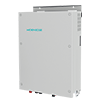
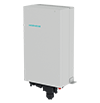
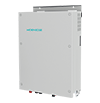
Facilities benefit from extended component lifespans and reduced parasitic energy consumption across daily cycles. Selecting a high-efficiency 125kW commercial energy storage inverter transforms standard microgrid installations into optimized power hubs.
Maintaining optimal operating temperatures becomes easier when internal semiconductor losses drop significantly across all operating ranges. Industrial sites operating in desert environments or high-salinity coastal zones experience severe thermal stress on power electronics hardware.
Advanced thermal profiles allow enclosures to maintain IP65 ingress protection ratings without sacrificing continuous output capacity. Operators gain predictable performance baselines during peak solar generation spikes.
Power conversion reliability improves because wide-bandgap devices tolerate higher junction temperatures under severe fault conditions. Thermal runaway risks decrease substantially compared to standard silicon assemblies operating near their maximum thresholds.
System designers push hardware boundaries further without risking catastrophic semiconductor failure during intense transient disturbances. Enhanced thermal headroom provides an extra layer of operational security.
Procurement officers frequently encounter higher upfront capital expenses when sourcing components built around a modern sic inverter core. Wafer fabrication complexity and specialized packaging requirements drive up initial manufacturing costs compared to traditional silicon counterparts.
Budgetary allocations must account for these premium acquisition prices during the preliminary financial modeling phase. Long-term operational savings eventually offset initial investments completely.
Supply chain maturity represents another critical constraint during large-scale rollout schedules across regional microgrid markets worldwide. Global foundry capacity for wide-bandgap wafers remains concentrated among a limited number of specialized semiconductor fabrication facilities.
Sourcing delays can disrupt tight construction timelines if supplier diversification strategies are absent. Technical buyers must establish multi-source agreements early to secure uninterrupted deliveries.
WidenEdge engineering teams prioritize robust supply chain partnerships to mitigate material availability risks effectively. Maintaining strict quality control over semiconductor packaging ensures that our power conversion systems deliver uncompromised reliability in the field. Careful inventory management bridges temporary market shortages while keeping project deployment schedules firmly on track.
Miniaturizing physical footprints stands out as a primary benefit of adopting wide-bandgap semiconductors in modern energy storage architectures today. Higher switching frequencies shrink the physical dimensions of magnetic components, filter inductors, and internal transformers substantially.
Reduced cabinet sizing simplifies containerized transport and accelerates on-site positioning procedures in cramped urban installations. System integrators achieve higher power densities per square meter.
Rapid voltage transitions, however, introduce complex electromagnetic interference challenges that demand sophisticated internal filtering architectures. High dv/dt slew rates generate high-frequency harmonic noise capable of disrupting sensitive communication protocols within nearby monitoring systems.
Engineers incorporate multi-stage passive filters and shielded cabling to ensure compliance with strict grid interconnection standards. Neglecting compliance requirements can lead to data packet loss.
Electromagnetic compatibility mitigation requires meticulous printed circuit board layout practices alongside advanced enclosure shielding techniques. Uncontrolled radiated emissions can otherwise interfere with auxiliary control sensors and automated supervisory metering equipment on-site.
Addressing these noise factors during the initial hardware design phase prevents costly retrofits after commercial commissioning. Comprehensive laboratory testing validates compliance before deploying a multi-megawatt sic inverter.
Managing high-frequency resonance demands advanced firmware algorithms capable of dynamically damping parasitic oscillations during sudden load steps. Control loops must execute faster sampling rates to maintain stability under complex weak-grid impedance conditions.
Software adaptability ensures that hardware advantages translate into tangible operational resilience. WidenEdge proprietary firmware architectures are meticulously tuned to harmonize high-frequency switching with robust grid stability parameters.
Meeting rigorous grid codes requires exceptional control accuracy under severe network imbalances. Wide-bandgap semiconductor devices allow rapid response times that assist microgrids in maintaining stable voltage references.
However, strict international standards demand rigorous harmonic filtering to prevent grid pollution during dynamic load shifts. Engineers design robust output filters that suppress high-frequency components without introducing excessive insertion losses during operation.
Compliance validation ensures that multi-megawatt systems meet utility interconnection requirements seamlessly without triggering local protection disconnects. Field testing protocols verify that harmonic distortion remains well within acceptable limits during transient events.
Thorough validation procedures provide asset owners with complete confidence in regulatory approval timelines across different jurisdictions. Comprehensive pre-commissioning assessments protect valuable project capital.
Balancing these engineering pros and cons requires a holistic evaluation of site-specific operational parameters and financial constraints. Industrial facilities prioritizing maximum round-trip efficiency and compact footprints will find wide-bandgap technology indispensable for modernizing infrastructure.
Conversely, projects operating under restricted upfront capital budgets must evaluate payback timelines carefully before committing to premium hardware. Selecting an optimal 125kW commercial energy storage inverter transforms site operational requirements.
Providing reliable power electronics expertise remains a foundational commitment for WidenEdge as we support global energy transitions. Collaborative engineering partnerships ensure that every deployed asset maximizes the technical potential of wide-bandgap semiconductors safely. Strategic hardware selection transforms complex electrical challenges into sustainable operational advantages for modern commercial enterprises.
Return