PCS efficiency affects LCOS because every conversion loss represents energy that must be supplied but does not become useful discharged energy. In a 125kW commercial energy storage inverter, these conversion losses can accumulate over thousands of operating hours and repeated charge-discharge events. While the efficiency difference may appear modest over a single cycle, the resulting energy consumption can become a recurring operating cost, making PCS efficiency an important economic consideration for commercial storage projects.
Levelized cost of storage, or LCOS, expresses the lifetime cost of a storage asset against the energy it delivers. Different methodologies define the metric somewhat differently, but efficiency losses are commonly relevant because imperfect conversion increases the amount of energy required to produce a given amount of useful output. A recent review notes that LCOS definitions vary, particularly in how charging costs and round-trip efficiency losses are treated.
The PCS sits directly in that conversion chain. During charging, it converts AC power to the battery's DC domain; during discharge, it performs the reverse conversion. Neither process is perfectly lossless.
Consequently, if two otherwise similar systems deliver the same useful energy but one requires more input energy because of higher conversion losses, the economic comparison cannot stop at equipment purchase price.
A useful way to understand the relationship is to follow energy through repeated cycles. Suppose a storage system is required to deliver a fixed amount of AC energy. Lower conversion efficiency means more energy must enter the system to produce that output.
That additional energy has an economic value. If charging electricity has a cost, conversion losses increase the amount purchased or otherwise consumed for each unit of useful discharge. Research on LCOS explicitly identifies electricity lost through imperfect round-trip efficiency as a storage cost.
The impact becomes more pronounced as annual throughput increases. A commercial system operating frequently has many more opportunities for conversion losses to accumulate than a battery used only occasionally for emergency backup.
PCS efficiency can therefore influence LCOS even when the initial capital cost of the converter is identical.
Efficiency should never be interpreted independently of dispatch. A system that cycles frequently places more emphasis on energy losses than one that spends most of its life in standby.
Operating duration also changes the economics. Higher annual discharged energy spreads fixed project costs across more output, while conversion losses continue to affect the energy required to achieve that output. Published LCOS research has identified utilization and efficiency among the variables that can materially influence storage economics.
Commercial and industrial projects can have particularly varied operating profiles. A battery may perform peak shaving on weekdays, absorb renewable generation at certain times, or provide backup capacity without regular cycling.
We therefore would not evaluate efficiency using a single percentage in isolation. The more useful question is how much energy the PCS consumes or loses under the project's expected annual operating profile.
This distinction is essential when calculating LCOS. PCS efficiency describes conversion performance, while round-trip efficiency generally captures the energy lost across the broader storage pathway.
Battery cells, DC wiring, auxiliary equipment, thermal management, transformers, and other components can contribute to total system losses. A PCS may therefore have strong conversion performance without determining the entire system's round-trip efficiency.
The DOE's energy-storage cost assessment treats LCOS as a comprehensive metric incorporating storage-specific costs and operational factors rather than a simple equipment-price calculation.
For procurement, we recommend asking suppliers to define exactly how their quoted efficiency is measured. Without a common test boundary, comparing percentages from different products can produce misleading conclusions.
A headline efficiency figure does not necessarily represent performance across every operating condition. Power level, operating mode, temperature, and system configuration can influence actual conversion losses.
That makes the load profile particularly important for commercial projects. If a battery spends substantial time operating at partial load, a nominal full-load efficiency figure may not represent the energy losses that dominate annual operation.
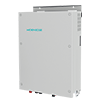
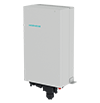
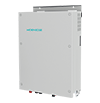
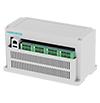
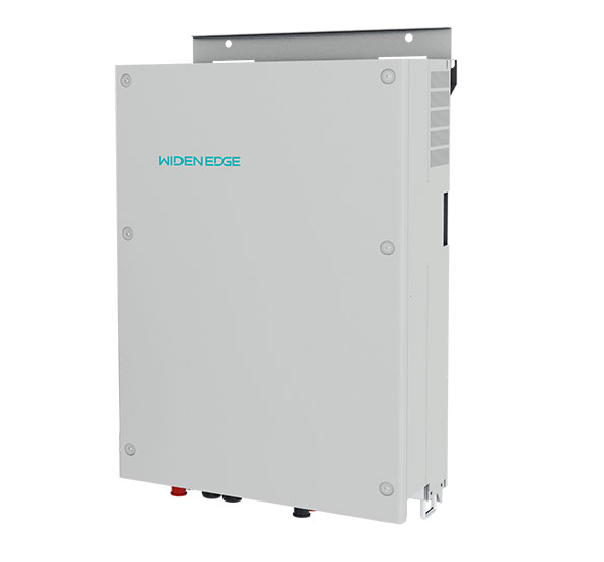
WidenEdge's MGC MK2 100/150kW platform is designed for microgrid applications and combines grid-forming control with functions including high overload capability, automatic load control, and support for grid-connected and off-grid operation. The product page does not publish a single efficiency value, so we would not assign an unsupported efficiency figure to the product.
Instead, a project evaluation should request efficiency data at relevant operating points and under the intended system configuration.
For a c&i energy project, the economic value of higher PCS efficiency depends on the amount of energy processed over the asset's life. Frequent cycling, high annual throughput, and meaningful charging-energy costs make conversion losses more financially visible.
That does not mean the highest-efficiency PCS is automatically the lowest-LCOS choice. Capital expenditure, maintenance, battery degradation, replacement requirements, financing assumptions, and utilization also influence the result. Current LCOS research emphasizes that capital costs and lifecycle assumptions can be highly influential in the final calculation.
The better approach is to model the complete project. Start with the expected AC energy delivered, calculate the corresponding charging requirement using the actual conversion and system losses, and then evaluate those losses over the planned operating life.
We use that framework when assessing c&i energy storage economics because it keeps efficiency connected to the quantity that ultimately matters: useful energy delivered over the project's lifetime.
For WidenEdge, PCS efficiency is therefore best understood as one part of a larger economic chain. A well-designed commercial storage inverter should be evaluated not only by its efficiency specification but also by how that efficiency interacts with the site's load profile, cycling strategy, operating modes, and system architecture.
The practical conclusion is straightforward: higher PCS efficiency can reduce the energy lost during conversion and, where those losses materially affect operating costs, contribute to lower LCOS. Yet the magnitude of that benefit depends on utilization and the definition of the LCOS model. Buyers should compare complete lifecycle energy and cost assumptions rather than selecting equipment from an efficiency percentage alone.
At WidenEdge, we believe the most meaningful comparison is the amount of useful AC energy a storage system can deliver over its life relative to all the costs required to achieve it. That perspective puts PCS efficiency in its proper place: not an isolated performance number, but a factor that can influence the lifetime economics of commercial storage.
Return