When we design power conversion systems for industrial microgrids, one of the most consequential decisions is whether to implement Virtual Synchronous Generator (VSG) algorithms or classical droop control. In our experience, the right choice is rarely about which technology is “better”—it is about which one fits the site's specific grid characteristics, load profile, and stability requirements.
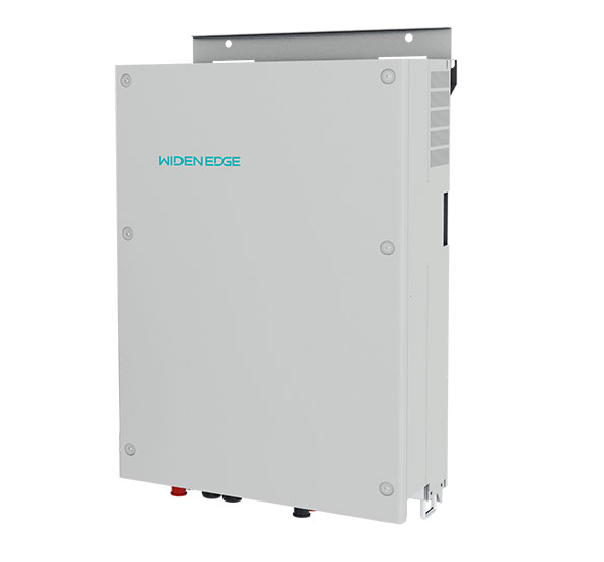
Choosing the right control strategy determines system resilience during sudden load steps. Developers must evaluate physical behavior under stress before finalizing firmware parameters.
Modern deployments require deep technical clarity regarding internal control loops and transient response characteristics under harsh conditions. Operational constraints vary wildly between isolated microgrids and utility-tied networks facing impedance swings.
Selecting improper firmware leads to chronic voltage oscillations and unexpected protection trips. Careful analysis of underlying control mathematics prevents costly redesigns post-commissioning.
Droop control mimics traditional generator governor behavior through straightforward proportional algebraic equations mapping power to frequency. Active power maps directly to frequency deviations, while reactive power correlates smoothly with voltage drops across terminals.
Power conversion hardware executes these proportional adjustments instantly without tracking rotational mass or momentum. Simplicity remains the primary operational advantage of this mathematical framework.
Calculations dictate that steady-state load sharing occurs naturally across parallel units under standard droop regulation profiles. Computational overhead stays remarkably low, making it ideal for standard installations requiring fast proportional responses.
However, lack of physical inertia exposes the electrical bus to rapid frequency spikes during generation loss. Asset designers must recognize these inherent boundaries before mapping site requirements.
Virtual synchronous generator logic deliberately emulates the complex swing equations of physical rotating machinery found in traditional power plants. Software algorithms create synthetic inertia, storing or releasing kinetic energy dynamically during transient grid disturbances.
Energy storage assets running this advanced architecture actively stabilize local frequency excursions without external support. Hardware behaves more like a traditional diesel generator than a static power converter.
Rotational emulation requires sophisticated internal damping factors to prevent unwanted hunting oscillations during parallel converter operations. Microprocessor workloads increase substantially to solve complex swing equations in real time across fast digital signal processors.
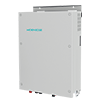
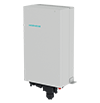
Deploying a 100kW grid-forming inverter equipped with VSG control brings unprecedented stability to weak network terrains. Engineers gain robust tools to combat high impedance and severe voltage sags.
Fault recovery behavior separates the two control philosophies during major grid anomalies and sudden transmission line faults. Droop systems react instantly to voltage imbalances through fast current injection loops designed for rapid stabilization.
Yet, rigid proportional responses can cause phase angle jumps that destabilize sensitive industrial loads downstream. VSG architecture smooths out transient trajectories by leaning on emulated rotational momentum.
Handling low short-circuit ratios demands the robust damping capabilities inherent in synchronous emulation algorithms. Weak grids collapse quickly when conventional tracking loops lose phase lock under severe fault conditions.
Advanced commercial pcs units leverage hybrid control layers to bridge these operational gaps successfully. System survival depends entirely on how fast the power electronics can inject reactive power.
Matching control schemes to specific operational environments dictates long-term project viability across challenging geographical landscapes. Industrial facilities featuring heavy motor starting loads benefit immensely from virtual inertia algorithms and robust transient handling.
A high-performance 100kW grid-forming inverter handles these sudden current spikes without tripping protective relays. Project planners must audit local grid impedance before locking down firmware profiles.
Evaluating site constraints prevents costly hardware incompatibilities during live commissioning phases and initial synchronization windows. Multi-vendor microgrids require standardized control parameters to prevent circulating currents among parallel operating power converters.
Facility managers should prioritize flexibility over rigid single-mode execution to accommodate future expansion. Operational adaptability ensures uninterrupted power delivery regardless of upstream grid volatility.
Physical deployments test theoretical control models against harsh operational realities found in remote industrial microgrids. Component thermal limits, switching frequency harmonics, and battery response latencies introduce tangible constraints on overall system efficiency.
Equipment manufacturers must optimize internal control loops to balance computational speed with stability margins. WidenEdge integrates these advanced control methodologies directly into resilient hardware platforms.
Deploying a robust commercial pcs requires careful tuning of control parameters during factory staging and site integration. Field engineers rely on adaptable software interfaces to configure droop curves or inertia settings on location.
Advanced diagnostic tools empower operators to monitor real-time damping performance across diverse load profiles continuously. Seamless transitions between operating modes guarantee continuous uptime for critical infrastructure.
Mastering the nuances of inverter control strategies transforms vulnerable microgrids into resilient power ecosystems capable of withstanding severe disruptions. Technical teams must continuously evaluate performance metrics against evolving grid codes and site demands over time.
Choosing optimal firmware configurations unlocks maximum efficiency from every installed megawatt-hour of storage capacity. WidenEdge continues supporting developers with cutting-edge power conversion solutions engineered for maximum field reliability.
Future energy infrastructure demands uncompromising stability across fluctuating generation portfolios and dynamic commercial loads globally. Strategic firmware selection remains the cornerstone of successful microgrid engineering, deployment, and long-term asset management.
Investing in flexible hardware guarantees adaptability as regional grid regulations mature and safety standards tighten. WidenEdge delivers advanced technological foundations designed to conquer tomorrow's electrical challenges seamlessly.
Balancing economic efficiency with technical rigor ensures long-term capital protection for large-scale energy storage investments. Project stakeholders must weigh computational complexity against the absolute necessity of fault ride-through performance in weak grids.
Intelligent control design ultimately determines whether an installation thrives under distress or succumbs to instability. Informed engineering choices pave the path toward fully autonomous and secure decentralized power networks.
Return