Diesel generators are dependable sources of electricity, but a diesel-battery hybrid system becomes more useful when the battery can actively participate in maintaining the microgrid.
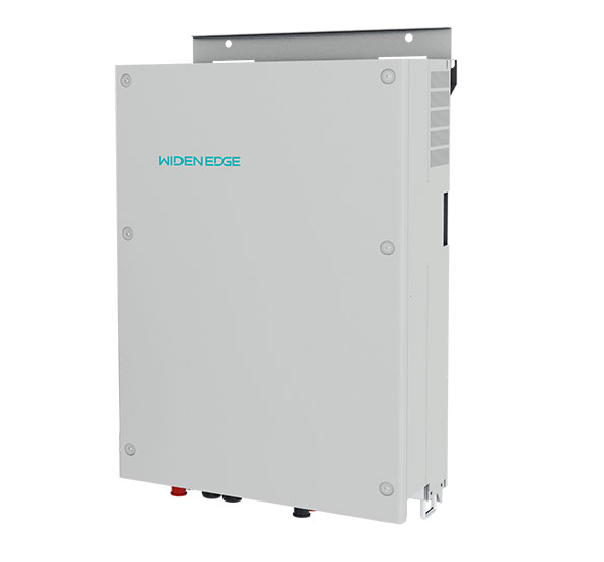
A grid-forming PCS gives the battery a stronger role: instead of waiting for a generator or utility source to establish the electrical reference, it can regulate the microgrid's voltage and frequency. That changes how generation, storage, and loads interact, particularly in remote or unstable-grid applications.
A conventional battery system may primarily store energy and respond to dispatch commands. In a grid-forming architecture, the PCS can establish the voltage and frequency reference for an islanded network. This gives the battery inverter a direct role in maintaining the electrical environment rather than simply supplying energy when the generator falls short.
That distinction is important in diesel-hybrid systems. The generator does not need to handle every short-term variation alone. Battery power can respond to changes in demand while the diesel unit operates according to a more deliberate dispatch strategy.
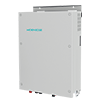
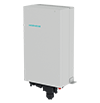
Our MGC platform uses grid-forming control with VSG and droop control, supporting operation in both grid-following and grid-forming modes. The product is designed specifically for microgrid applications and can switch between these operating modes.
Diesel generators are often expected to provide the primary source of power in remote systems. Their operating behavior, however, is closely connected to changing electrical demand. Frequent changes in load can make generator dispatch more complicated, especially when renewable generation is also present.
A grid-forming PCS can take responsibility for fast electrical regulation while the generator supplies sustained energy. That creates a useful division of responsibilities: the battery responds quickly, while diesel generation can be managed around longer-duration energy requirements.
For a grid forming microgrid inverter, the objective is therefore not simply to replace diesel generation. Instead, the PCS creates an electrical platform in which diesel generators and batteries can work together without forcing one asset to perform every function.
Industrial loads can change abruptly. Starting equipment, switching large loads, or losing a power source can create disturbances that need to be addressed immediately.
The MGC 100/150kW platform is specified with fast response to sudden load changes, automatic load-fluctuation control, and a built-in synchronization interface. It also supports high overload operation and unbalanced loads, including 100% unbalanced-load support in off-grid mode according to the manufacturer's product information.
Such functions matter because diesel generators and batteries do not respond in exactly the same way. The battery can provide rapid power through the PCS, while the generator can remain focused on sustained generation. Correct control coordination can therefore reduce the need to size the diesel generator around every short-duration disturbance.
Adding solar to a diesel system introduces another variable: renewable output changes with available resources. Without suitable controls, the generator, battery, and renewable source can compete for the appropriate operating point.
Grid-forming control gives the battery PCS an active role in maintaining the AC network while renewable generation changes. Excess solar power can be directed toward battery charging when conditions permit, while stored energy can support the system when renewable output decreases.
This is particularly relevant to a grid forming microgrid inverter because the inverter is not merely converting stored DC energy. It is participating in voltage and frequency management while multiple power sources change their contribution.
Battery integration does not automatically reduce diesel consumption. The control strategy determines whether stored energy is dispatched at useful times and whether generators are operated efficiently for the project's load profile.
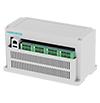
The MGC product includes automatic diesel-generator control and self-learning of key generator parameters. The manufacturer also identifies automatic load-control functionality as part of its diesel-management approach.
That type of coordination can make the battery more than a backup reserve. The system can determine when battery power, renewable power, and diesel generation should contribute to the microgrid according to operating conditions and available energy.
For project developers, this is where the value of a 100kW grid-forming inverter should be assessed. Rated output is only one specification. Control behavior, overload capability, generator coordination, and response to load changes can have a greater influence on actual system performance.
Once the battery actively forms the grid, the PCS sits at the intersection of several operating decisions. It interacts with the battery, generator, renewable source, loads, and supervisory controls. Poor coordination at this point can undermine the advantages of adding storage.
We therefore evaluate the PCS as part of the complete microgrid rather than as an independent inverter. WidenEdge's MGC platform combines grid-forming control, diesel-generator intelligence, fast load response, and support for challenging load conditions in one microgrid-oriented system.
The architecture also matters during abnormal conditions. A project may need to move between grid-connected and islanded operation, start with limited available generation, or continue supplying loads during an outage. The PCS control strategy should be evaluated against those actual sequences.
A useful diesel-battery hybrid should assign each energy source a clear role. The diesel generator can provide sustained generation, renewable sources can reduce fuel-dependent production, and the battery can provide fast electrical response and energy shifting. The grid-forming PCS connects these functions into one controllable AC system.
When selecting equipment, we would examine generator communication, synchronization behavior, load response, overload capability, unbalanced-load handling, operating-mode transitions, and the control logic used to coordinate diesel and battery power.
That is why a grid forming microgrid inverter can improve a diesel-battery system in ways that battery capacity alone cannot. The fundamental improvement comes from control: the PCS allows the battery to actively shape the microgrid's electrical behavior while the generator is managed around the longer-term energy requirement.
WidenEdge approaches diesel-storage projects from this system perspective, combining power conversion with microgrid control functions rather than treating the battery inverter as a standalone component.
Ultimately, the strongest diesel-battery hybrid is not necessarily the system with the largest battery or generator. It is the architecture that gives each source an appropriate job and coordinates those sources under real operating conditions. A well-designed grid-forming PCS can provide the control layer that makes that division of responsibility practical.
Return