
Selecting an outdoor inverter for a microgrid is not simply a matter of finding a high ingress-protection number. A 45kW solar-storage inverter may operate beside PV arrays, batteries, generators, or critical loads while facing dust, rain, humidity, and potentially corrosive air. The real question is whether IP65 or NEMA 4X better addresses the conditions at the project site.
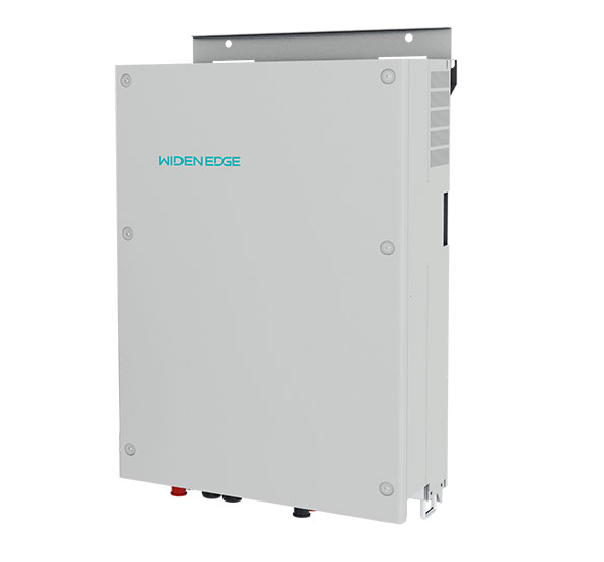
We recommend treating the two ratings as different specification tools rather than competing labels. IP65 describes a defined level of enclosure protection under the IEC system, while NEMA 4X addresses a broader set of enclosure characteristics. That distinction can materially affect how an EPC or system integrator specifies equipment.
A harsh outdoor microgrid can expose power electronics to several environmental stresses simultaneously. Dust may accumulate around equipment installed near solar fields. Heavy rain can drive water toward cabinet surfaces and entry points. High humidity can persist for long periods, particularly in tropical or island locations.
Coastal projects introduce another concern: corrosive atmospheric agents. A cabinet that handles rain effectively may still require additional attention to corrosion resistance, materials, seals, and installation practices.
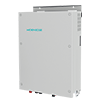
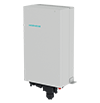
The product specification for our 45kW platform explicitly identifies islands, dusty sites, and high-humidity environments as target conditions. It also describes a high-protection design for these applications.
That makes enclosure protection directly relevant to the title's selection question. The appropriate rating should reflect the environment in which the microgrid inverter will actually operate, rather than being selected from the power rating alone.
IP65 and NEMA 4X answer related but different questions. IEC 60529 establishes the IP Code for classifying degrees of protection provided by electrical enclosures.
Under the IP system, the first digit addresses protection against solid foreign objects, while the second addresses water ingress. IP65 therefore indicates a dust-tight level for the first characteristic and protection against water jets for the second.
NEMA takes a broader approach. NEMA states that its enclosure types consider solid-object and water ingress but also characteristics such as corrosion resistance, icing, lubricant resistance, and construction details. Crucially, NEMA says an IP degree rating cannot be stated as equivalent to a NEMA Type designation.
That means an IP65 specification should not automatically be presented to a customer as NEMA 4X compliance. NEMA's own conversion guidance also warns that its conversion tables work from NEMA enclosure types toward IEC classifications, not the other way around.
For a buyer comparing suppliers, this is the first major decision point: if the project specification explicitly requires NEMA 4X, ask for evidence addressing NEMA 4X rather than accepting IP65 as an automatic substitute.
The difference becomes more significant when the site combines water exposure with corrosive atmospheric conditions. NEMA documentation describes Type 4X as providing the characteristics of Type 4 with an added degree of protection against corrosive atmospheric agents.
That makes NEMA 4X particularly relevant to project specifications where corrosion resistance is a defined enclosure requirement. Coastal microgrids are an obvious example to investigate, but the final requirement should still come from the actual environmental assessment and project standard.
IP65 remains useful when the primary specification is IEC ingress protection. It gives engineers a clear language for dust and water protection. However, the rating alone does not establish all of the additional characteristics covered by a NEMA enclosure type.
We therefore would not ask, “Which number is higher?” The more useful question is, “Does the selected enclosure classification address every environmental requirement written into the project specification?”
That distinction can prevent an expensive procurement mismatch. A supplier may legitimately provide an IP65 enclosure without claiming NEMA 4X, while a project owner may have a specific NEMA requirement that goes beyond the ingress characteristics represented by IP65.
The enclosure should be evaluated together with what the 45kW equipment is expected to accomplish. A solar-storage inverter in an outdoor microgrid is not merely a PV conversion device if the project requires battery integration and independent grid operation.
Our MGC 45kW platform uses dual DC interfaces for simultaneous PV and battery connection. Its published specifications also include grid-forming control with VSG and droop control, along with seamless switching between grid-following and grid-forming modes.
Off-grid operation is another important part of the selection. The platform is specified to support 100% single-phase unbalanced loads in off-grid operation, while its product description emphasizes application in complex and harsh environments.
For an EPC, that means enclosure protection should not be evaluated independently from system architecture. A suitable microgrid inverter needs environmental protection that matches the site while also fitting the PV, battery, load, and operating-mode requirements.
A technically suitable 45kW solar storage inverter should therefore be assessed as part of the complete microgrid design. Enclosure classification is one selection criterion, not a substitute for reviewing the inverter's electrical and control functions.
We suggest a simple decision sequence for project teams.
First, define the site exposure. Document dust, rain, humidity, marine atmosphere, and other environmental conditions that could affect the enclosure.
Second, identify the governing standard. If the project documentation specifies IEC 60529 IP protection, evaluate the required IP level. If it specifies NEMA 4X, request documentation demonstrating the applicable NEMA requirement rather than converting IP65 into NEMA 4X by assumption.
Third, examine the complete installation. Cable entries, doors, seals, mounting arrangements, and field modifications can affect how the installed enclosure performs. NEMA notes that its enclosure types apply to equipment fully installed and ready for use.
Finally, check the inverter's actual microgrid role. At WidenEdge, we would assess enclosure protection alongside PV and battery integration, grid-forming capability, off-grid operation, and the environmental conditions identified at the project site.
The answer is therefore not that IP65 is universally better than NEMA 4X, or vice versa. IP65 is an IEC ingress-protection classification, while NEMA 4X incorporates a broader enclosure specification that includes additional environmental characteristics. For a harsh outdoor microgrid, we would select the rating from the site's requirements and governing project standard, then verify that the 45kW inverter's complete design supports that duty. That is a more defensible engineering decision than choosing an enclosure label by itself.
Return