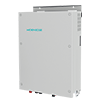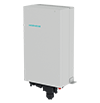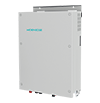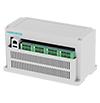
Commercial microgrid sites using pv and battery storage often operate across a mix of indoor and outdoor environments. Equipment may be installed in a controlled room, under a covered area, or directly outdoors, where heat, dust, moisture, and changing weather conditions can affect enclosure performance. This makes enclosure selection an important consideration: a ventilated chassis may work well in a clean indoor space, while outdoor installations may require a sealed design for more reliable protection.
High-power conversion systems demand targeted physical safeguards when deployed outside controlled architectural envelopes. Unshielded electronics suffer accelerated degradation when exposed to unmitigated ambient humidity and changing barometric pressures. System planners must evaluate localized weather history rather than relying on regional meteorological averages.
Recognizing these unique microclimate factors prevents costly thermal trips and unexpected hardware failures. Proper engineering assessment ensures long-term operational resilience across complex deployment landscapes. System designers must weigh site exposure against economic constraints and long-term regulatory compliance requirements.
Establishing precise environmental thresholds helps project developers avoid over-specifying equipment while maintaining absolute reliability under stress. Commercial microgrids face distinct regulatory codes and safety standards depending on their precise geographic coordinates.
Evaluating moisture ingress risks requires looking closely at seasonal precipitation patterns and localized humidity spikes. Standard industrial facilities experience vastly different atmospheric stressors compared to remote island microgrids or coastal logistics hubs.
Engineers must map every external variable before choosing between ventilated designs and sealed hardware architectures. Getting this baseline right guarantees optimal capital expenditure allocation across multi-year contracts and operational lifecycles.
Arid regions present severe wind-driven sand and fine dust hazards that infiltrate standard cooling vents instantly. Fine particulate matter coats internal circuit boards, creating resistive thermal blankets that trap damaging heat.
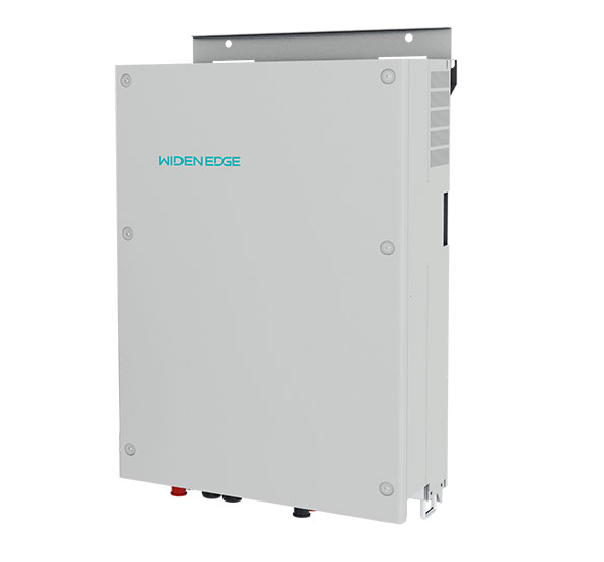
Deploying a 45kW solar storage inverter in these zones requires absolute dust-tight isolation to protect sensitive gate drivers. Airtight casing designs prevent abrasive sand particles from wearing down internal cooling fans and moving parts.
Commercial sites near active construction zones face similar particulate challenges that demand rigorous physical isolation. Complete dust exclusion ensures continuous multi-megawatt generation without the threat of internal short circuits or thermal overload events.
Rooftop commercial installations expose power conversion equipment to driving rain, snow accumulation, and pooling water. Standard drainage channels can clog with organic debris, causing moisture to back up into sensitive terminal compartments.
An IP65 rating guarantees complete protection against low-pressure water jets coming from any direction. Architects integrating pv and battery storage systems on flat commercial roofs must account for severe storm run-off dynamics.
Water intrusion destroys high-voltage DC collection buses, triggering immediate system shutdowns and expensive safety audits. Certified water-resistant housings mitigate these severe meteorological risks entirely, safeguarding multi-tenant commercial buildings against sudden operational paralysis and revenue loss.
Manufacturing districts and logistics parks release airborne chemical residues that react aggressively with exposed copper components. Fine chemical mists settle on electronic subassemblies, initiating electrochemical migration and conductive trace corrosion.
Selecting a sealed housing protects internal control logic from these aggressive industrial contaminants. At WidenEdge, our design engineers address these complex manufacturing realities by implementing rigorous enclosure engineering protocols. Industrial microgrids operating near chemical processing plants cannot rely on standard ventilated electronics architectures.
Protective seals block corrosive vapors from reaching sensitive microprocessors and analog monitoring circuits, ensuring prolonged subsystem durability.
Unplanned downtime in commercial microgrids translates directly to severe financial losses for industrial energy consumers. Continuous asset operation depends heavily on preventing environmental variables from interfering with power conversion hardware. Reliable sealing eliminates the risk of condensation forming during rapid diurnal temperature swings.
Our team at WidenEdge builds advanced power conversion platforms designed to endure harsh ambient conditions without performance loss. We ensure that every 45kW solar storage inverter delivers predictable energy throughput regardless of local weather shifts. This uncompromising reliability protects commercial investments against premature component aging and thermal stress under peak loads.
The economic rationale for choosing sealed enclosures becomes clear when evaluating total facility maintenance budgets over time. Preventing moisture ingress avoids expensive board-level repairs and eliminates the need for emergency technician dispatches.
Commercial facility owners achieve rapid return on investment by selecting weather-hardened power electronics from the outset. Project stakeholders must carefully balance upfront casing costs against long-term operational risk profiles.
Rigorous enclosure certifications minimize insurance liabilities across remote or industrial commercial microgrids. Proper component selection guarantees stable multi-year performance under extreme weather events and seasonal temperature transitions.
Our manufacturing philosophy at WidenEdge prioritizes robust physical protection to secure mission-critical energy assets. Integrating sealed power conversion equipment transforms vulnerable microgrid installations into resilient, long-term power hubs.
Engineers navigating complex siting challenges can confidently rely on fully rated enclosures to maintain optimal system health. Thorough environmental auditing ensures that enclosure specifications match exact local hazard levels. Proactive system design prevents costly retrofits later in the project lifecycle.
Advanced thermal modeling helps maintain internal equilibrium without sacrificing external sealing integrity. Sustainable off-grid deployment ultimately depends on meticulous attention to enclosure sealing standards and robust physical engineering.
Return