Engineers designing modern energy systems can easily overlook how quickly power demand rises when operating conditions change. If an electrical system has too little capacity to handle these short-term spikes, protective devices may trip when new loads start or existing equipment ramps up.
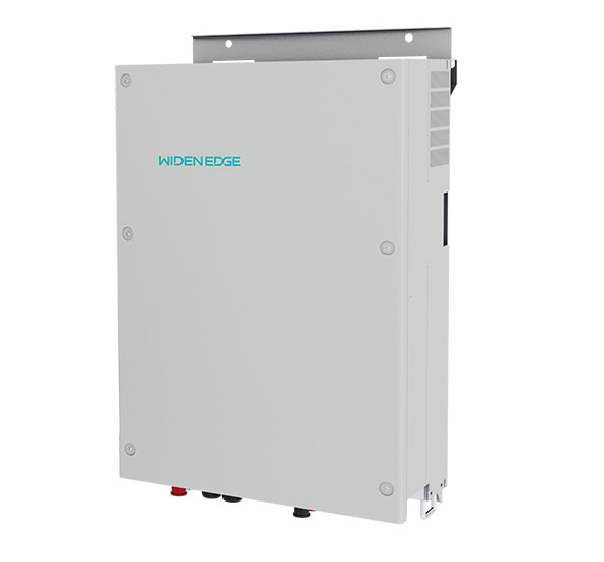
Power conversion hardware must absorb high transient spikes without compromising core voltage stability or frequency regulation. Selecting improper capacity ratings leads to chronic operational instability and equipment degradation across distributed networks. Proper sizing begins with mapping real-world transient profiles rather than relying on steady-state averages.
Distributed generation assets operating outside utility oversight encounter unpredictable load fluctuations throughout daily cycles. Power conversion systems function as the vital heartbeat balancing instantaneous generation against consumer demand. Managing these sudden variances requires intelligent hardware architecture and robust thermal design parameters. System planners must calculate exact peak margins to guarantee uninterrupted service during severe operational transients.
Unbalanced phase conditions further complicate transient management within decentralized electrical configurations. Multiplying baseline ratings by arbitrary safety factors often results in costly over-engineering or vulnerable under-sizing. Precise mathematical modeling ensures that power conversion units handle maximum expected surges safely.
Inductive machinery such as pumps and compressors draw massive surge currents during initial motor startup sequences. Starting currents frequently reach five to seven times nominal operational amperage values.
Power conversion units must supply this instantaneous reactive demand without dropping output voltage below acceptable tolerances. Failing to accommodate inductive startup spikes triggers immediate under-voltage protection lockouts.
Heavy industrial applications amplify these mechanical startup challenges across localized distribution nodes. Facility upgrades often introduce large inductive loads that strain existing power electronics beyond standard ratings. Hardware featuring robust overload headroom absorbs these heavy initial currents smoothly.
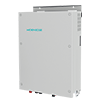
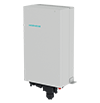
Engineers specifying a 60kW off-grid PV inverter must evaluate motor load startup characteristics meticulously.
Soft-starters and variable frequency drives mitigate some startup stress but rarely eliminate transient peaks entirely. Power conversion electronics must retain sufficient margin to absorb unmitigated reactive power surges. Equipment longevity depends on shielding semiconductor switches from repeated high-current thermal shocks.
Silicon carbide and insulated-gate bipolar transistors possess strict thermal thresholds during high-current operational pulses. Sustained overloads generate extreme junction temperatures that risk permanent semiconductor degradation. Thermal dissipation systems must transfer excess heat away from sensitive silicon dies instantaneously.
Manufacturers design hardware enclosures with specific thermal time constants governing short-term overload durations. Exceeding manufacturer-specified duration limits forces immediate power derating or emergency shutdown procedures. Advanced cooling channels improve heat rejection rates, allowing slightly higher transient capacity windows.
Balancing cost constraints against semiconductor durability remains a central challenge for power electronics manufacturers. Silicon carbide modules offer superior thermal conductivity compared to legacy silicon alternatives. Utilizing advanced materials allows our engineering team at WidenEdge to optimize overload performance.
Optimizing semiconductor usage prevents premature hardware aging while keeping system acquisition costs competitive. Designers must review junction-to-case thermal resistance metrics carefully before finalizing hardware selections.
Fault clearance protocols require temporary current injections that far exceed normal continuous operating ratings. Protective relays rely on high fault current availability to trip upstream circuit breakers effectively. An islanded microgrid lacks the infinite fault current contribution typical of large utility connections.
Power conversion units must supply up to two hundred percent of rated current during fault clearing events. Insufficient fault current output prevents protective devices from isolating faulted branch circuits promptly. Maintaining system selectivity during electrical faults protects healthy loads from unnecessary secondary outages.
Grid-forming control algorithms dictate how inverter hardware responds to severe voltage sags and short-circuit conditions. Advanced control firmware injects reactive current rapidly to support local voltage recovery. Sustaining voltage stability during grid disturbances prevents cascading system collapse.
Operating an islanded microgrid successfully requires strict adherence to local grid code compliance standards.
Capital expenditure budgets dictate strict boundaries on power electronics sizing across commercial deployment projects. Specifying excessive overload capacity inflates upfront equipment costs without delivering proportional operational value. Conversely, under-specifying hardware compromises facility reliability during peak production hours.
Commercial facilities often experience predictable daily demand spikes associated with shift changes or machinery startup. Energy storage systems absorb these predictable peaks, reducing the required continuous rating of generation assets. Integrating battery storage intelligently minimizes the necessity for oversized power conversion hardware.
Project developers must weigh the financial cost of potential downtime against incremental hardware investments. Comprehensive load profiling identifies exact peak durations, guiding optimal capacity selection. Precision engineering eliminates wasteful over-provisioning while ensuring absolute operational resilience.
Financial modeling tools help stakeholders visualize long-term return on investment across different sizing scenarios. Balancing peak shaving requirements with actual load curves prevents unnecessary capital expenditure.
Establishing definitive sizing rules requires synthesizing motor starting requirements, fault clearing needs, and thermal constraints. System designers should target an overload capacity of one hundred fifty percent for short durations. Providing this headroom guarantees seamless operation under harsh field conditions.
Rigorous site auditing remains the single most effective method for determining true operational envelope requirements. Skipping detailed load analysis leads to chronic performance bottlenecks and premature equipment failure.
Modern microgrid installations demand reliable performance across every connected subsystem and node. For projects operating in demanding off-grid environments, WidenEdge emphasizes properly rated power electronics and careful system engineering to support long-term asset performance. Attention to component selection, protection, and installation practices can make the difference between a dependable energy system and one burdened by recurring operational issues.
Return