A microgrid requiring 600kW of power conversion can be built around one large PCS or several smaller units operating in parallel. Although both architectures can deliver the same nominal capacity, they behave differently when a unit is offline, when the site expands, and when the system enters islanded operation.
For project owners and EPC teams, the right question is therefore not simply which PCS has the lower price. It is which architecture delivers the required power availability with an acceptable level of complexity.
A single 600kW PCS concentrates the entire conversion function into one power block. The battery system, AC bus, protection scheme, and controls can be organized around that central converter. Fewer PCS units can simplify electrical integration, communications, commissioning, and routine supervision.
Multiple smaller PCS units divide the same conversion capacity into independent blocks. For example, a project could distribute its required capacity across several converters rather than relying on one device. The resulting architecture contains more equipment, but the system no longer depends on a single PCS for its entire rated power.
That difference affects more than equipment count. It changes the system's failure behavior, expansion strategy, control requirements, and maintenance options. We therefore evaluate the architecture as a complete microgrid rather than comparing PCS nameplate ratings in isolation.
Failure behavior is often the strongest argument for distributed PCS capacity. If a single 600kW unit becomes unavailable, the associated architecture can lose its entire PCS conversion path unless another conversion path exists. Planned maintenance creates a similar issue: taking the central PCS offline can affect the full system.
Multiple smaller units divide that exposure. If one converter is unavailable, the remaining units may continue operating and supply part of the site's required power, provided the microgrid controls, battery configuration, and protection system are designed for such operation.
The value of this arrangement depends on the load. A facility with a 400kW critical load does not evaluate a PCS outage in the same way as a site where losing 100kW temporarily is acceptable. We would therefore calculate the minimum power required during a single-unit outage before deciding whether distributed capacity provides meaningful operational value.
A 600kW energy storage inverter can be attractive where the complete rated output must be available from one conversion block. Multiple units become more compelling where maintaining partial capacity during maintenance or equipment failure is more important than minimizing the number of PCS assets.
Project timing can change the economics of PCS architecture. Some microgrids are designed around a fixed load from day one. Others begin with a smaller energy demand and expand as production capacity, renewable generation, or electrification increases.
A single large PCS is straightforward when the final capacity is known and will be installed immediately. The electrical system can be designed around the full conversion rating without introducing additional parallel PCS interfaces.
Modular capacity offers a different path. Smaller PCS units can be added as the site grows, subject to the system's electrical design and the manufacturer's supported parallel architecture. This can reduce the need to install the entire conversion capacity before it is required.
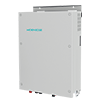
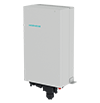
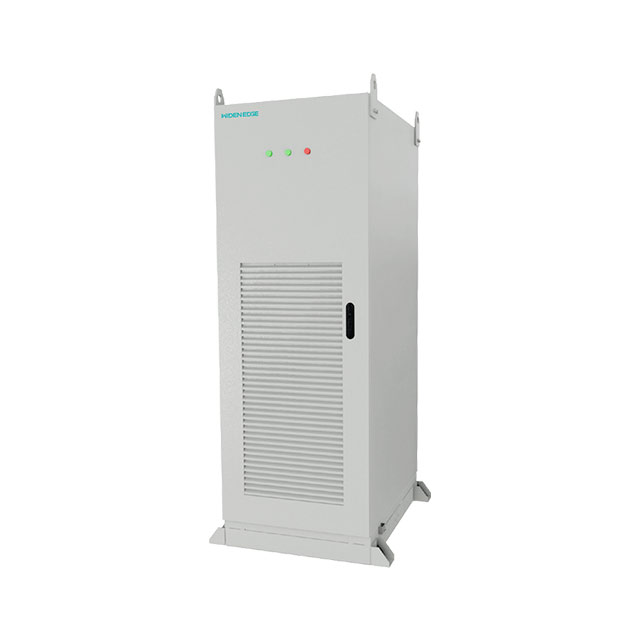
The MGC 600kW platform provides an example of a modular architecture. Its published design supports single-bus or multi-bus DC configurations and intelligent cabinet paralleling for expansion to higher power levels. The manufacturer also specifies front-and-rear access and side-by-side installation to support different equipment layouts. MGC 600kW product information
For an EPC, the decision should therefore include the project's five- and ten-year capacity plan, not just today's load calculation.
Parallel PCS operation introduces a technical question that does not exist to the same extent with one central converter: how will the individual units behave as one coordinated power system?
The PCS units must share active and reactive power appropriately while maintaining stable voltage and frequency. Islanded microgrids make this particularly important because there may be no utility grid available to establish the electrical reference.
Grid-forming control can become part of that coordination strategy. Rather than simply following an existing grid waveform, grid-forming converters can establish voltage and frequency references for an islanded electrical network. Multiple grid-forming units then require a coordinated control architecture so that their operating points do not conflict.
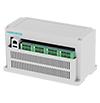
The MGC platform is designed for grid-forming applications and uses VSG and droop control. Its published information also describes operation with a Hub controller for coordinating multiple MGC units, with support for parallel operation of up to 32 units. MGC 600kW product information
Consequently, several smaller PCS units should never be evaluated simply as several copies of the same inverter. The project team must verify how those units communicate, share load, respond to disturbances, transition between operating modes, and behave when one unit is removed.
Centralized conversion retains important practical advantages. A single unit can reduce the number of major PCS interfaces and may simplify commissioning, protection coordination, communications, and maintenance procedures.
Physical constraints can also influence the decision. If the project has a compact equipment area and the selected 600kW PCS provides sufficient power density, one unit may produce a cleaner installation than several cabinets distributed across the site.
The architecture can be particularly reasonable when the project has a stable load profile, little expectation of future expansion, and no requirement to maintain substantial power following a PCS outage. In these circumstances, adding multiple converters purely for redundancy may introduce complexity that the project does not actually need.
A utility scale inverter should therefore be selected against the operating architecture rather than against a generic assumption that larger or smaller PCS units are inherently better.
The most useful way to compare the two architectures is to identify the minimum power the microgrid must maintain under abnormal conditions.
Suppose a facility requires 600kW during normal operation but only 250kW for critical loads during a PCS outage. Several smaller units may offer a practical path to retaining that critical capacity. If the site must maintain the full 600kW continuously, distributed PCS capacity may still be useful, but the system will need sufficient redundancy beyond the minimum installed rating.
We would also examine battery segmentation, AC switchgear, protection, communications, thermal management, spare-parts strategy, and commissioning requirements. A modular PCS arrangement can only deliver its intended resilience if the rest of the microgrid is designed to support continued operation after an individual unit is unavailable.
WidenEdge approaches PCS selection from that system perspective. Our MGC 600kW platform combines high-power conversion with configurable DC architecture and support for parallel operation, giving project teams flexibility when the required capacity or operating configuration cannot be reduced to a single fixed arrangement. MGC 600kW product information
Ultimately, one 600kW PCS is not automatically better than multiple smaller PCS units. Centralized conversion favors simplicity and concentrated capacity; distributed conversion can favor resilience, staged expansion, and operational flexibility.
The decisive question is how much capacity the microgrid must retain when one conversion unit is unavailable—and how much architectural complexity the project is prepared to accept to achieve that outcome.
Return