In our microgrid projects, the question of parallel scalability always comes up early: how many PCS units can we safely connect to one AC bus? We have seen projects where the answer was driven by datasheet optimism rather than engineering reality—and the results included circulating currents, control instability, and unexpected trips. Here is how we determine the practical parallel limits for 600kW energy storage inverter systems.
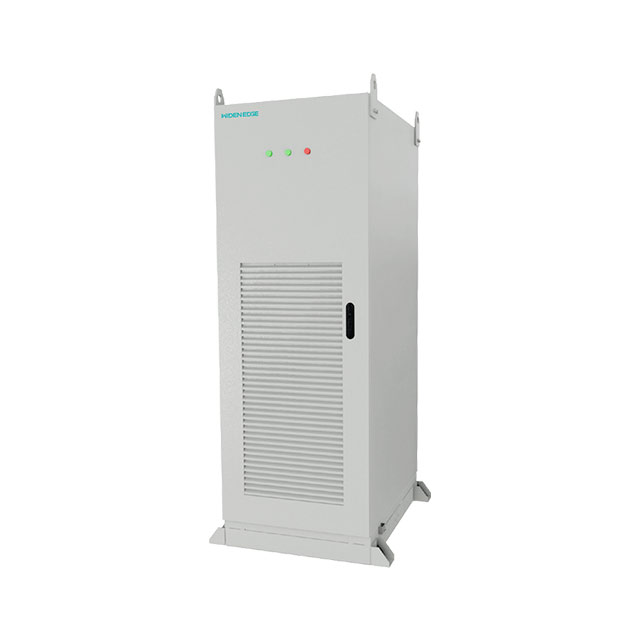
System planners frequently question how many independent devices can operate harmoniously within a shared AC bus topology. Exceeding recommended parallel limits introduces severe harmonic distortions, control instability, and voltage oscillations. Determining safe interconnection caps demands rigorous mathematical modeling of electrical bus characteristics and control limitations.
Operators deploying large-scale generation assets must understand the physical barriers governing multi-unit electrical coupling. Electrical resistance, switching jitter, and phase discrepancies accumulate rapidly as more conversion nodes join the network.
Ignoring these cumulative factors leads to sudden protective trips and compromised grid reliability. Proper architecture design prevents destructive interactions between adjacent power conversion modules during transient events.
Commercial microgrid designers often evaluate whether a single 600kW energy storage inverter can be scaled infinitely through modular expansion. Equipment manufacturers establish strict operational ceilings based on internal firmware processing power and digital signal processor bandwidth. Hardware limits ensure that every connected node responds uniformly to dynamic load changes without phase drifting.
Modular power architectures simplify project expansion by allowing incremental capacity additions as facility loads grow over time. Standardized physical connection points and plug-and-play control interfaces accelerate on-site installation workflows significantly.
Mechanical engineers house multiple conversion modules inside a centralized parallel cabinet to optimize physical footprint utilization. Centralized termination points streamline high-voltage cabling runs while maintaining strict safety clearances between adjacent hardware bays.
Balancing power output across dozens of interconnected modules requires sophisticated master-slave or decentralized droop control topologies. Uncoordinated control loops cause severe load-sharing imbalances where a single module carries disproportionate current.
Master controllers must distribute active and reactive power commands evenly among all active conversion units simultaneously. Failure of primary coordination links triggers automated failover routines to prevent localized thermal overloads.
System reliability scales upward only when individual hardware nodes maintain high internal synchronization accuracy. Decentralized grid-forming algorithms allow units to share operational burdens without relying on vulnerable central single points of failure. Architectural resilience depends on robust hardware redundancy and fast communication response metrics across the cluster.
Microscopic voltage differences between parallel-connected conversion units generate undesirable circulating currents within the shared AC loop. Circulating currents cause unnecessary thermal stress on semiconductor switches even when external net export power remains zero. Hardware designers minimize these internal parasitic flows through high-precision pulse-width modulation adjustments.
Synchronization precision must remain within strict microsecond tolerances to prevent destructive cross-current spikes among modules. Minor hardware component aging or temperature-induced parameter drift can exacerbate circulating current magnitudes over extended operational lifespans. Regular calibration routines help maintain tight phase alignment across all active conversion channels.
Engineers specifying a 600kW energy storage inverter must verify internal output impedance matching specifications carefully. Mismatched output reactances amplify voltage discrepancies, rendering large parallel clusters unstable during transient disturbances. Precise component selection eliminates harmonic interference and protects internal filtering components from premature degradation.
High-speed digital communication backbones coordinate state variables, voltage angles, and current sharing parameters across the array. Fiber-optic communication links provide the necessary bandwidth and electromagnetic immunity required for harsh industrial deployment environments. Data packet latency must not exceed critical millisecond thresholds to maintain stable droop control loops.
Adding excessive units to a single communication bus introduces data congestion and packet delivery delays. Network saturation causes control loops to lag, triggering hunting behaviors and severe frequency oscillations. Manufacturers cap maximum parallel node counts strictly to prevent communication bus bottlenecks during high-stress operations.
Control engineers deploy redundant ring topologies to ensure uninterrupted data exchange if a primary communication link fails. Robust network architecture guarantees that critical synchronization signals reach every connected module instantaneously. System stability relies entirely on uninterrupted data fidelity across the entire digital control plane.
Clustering multiple high-power conversion modules into a single enclosure creates intense localized thermal concentration zones. Heat rejection requirements multiply exponentially as more units operate concurrently within confined physical footprints. Inadequate ventilation causes ambient air temperatures inside the parallel cabinet to exceed semiconductor rating thresholds.
Thermal management systems must circulate cooling air or refrigerant loops uniformly across every installed power module. Hotspots develop rapidly if airflow distribution channels suffer from poor aerodynamic design or filter clogging. Elevated junction temperatures degrade internal capacitors and reduce overall system operating lifespans drastically.
Operators monitor internal thermal telemetry continuously to detect cooling anomalies before protective derating events occur. Advanced thermal modeling ensures that physical spacing rules prevent mutual heating between adjacent conversion units. Proper thermal engineering remains the primary physical bottleneck dictating maximum parallel cluster sizes.
Industry standards typically cap direct parallel grouping of standard power conversion modules between eight and sixteen units. Exceeding this practical threshold introduces diminishing returns regarding system stability, control complexity, and fault management. Large-scale energy storage deployments utilize multiple distinct microgrid sub-clusters rather than one massive parallel array.
Sub-clustering isolates electrical faults, preventing a single module failure from cascading across the entire facility network. Centralized energy management systems coordinate multiple sub-clusters seamlessly to achieve multi-megawatt generation targets safely. Strategic compartmentalization optimizes maintainability and minimizes overall system downtime during scheduled servicing intervals.
Deploying resilient decentralized energy infrastructure requires balancing raw power output targets against fundamental physical constraints. Understanding parallel connection limits empowers engineers to design robust, high-availability microgrids that endure extreme operating conditions.
Diligent system planning ensures decades of reliable performance across complex commercial and industrial applications. At WidenEdge, our engineering teams optimize multi-unit parallel scaling for every custom project.
Return