
A U.S. solar project should not approve a converter based on a product page and a short datasheet. Engineers, EPC contractors, inspectors, and commissioning teams need evidence that connects the equipment's stated capabilities to its actual installation and operating conditions.
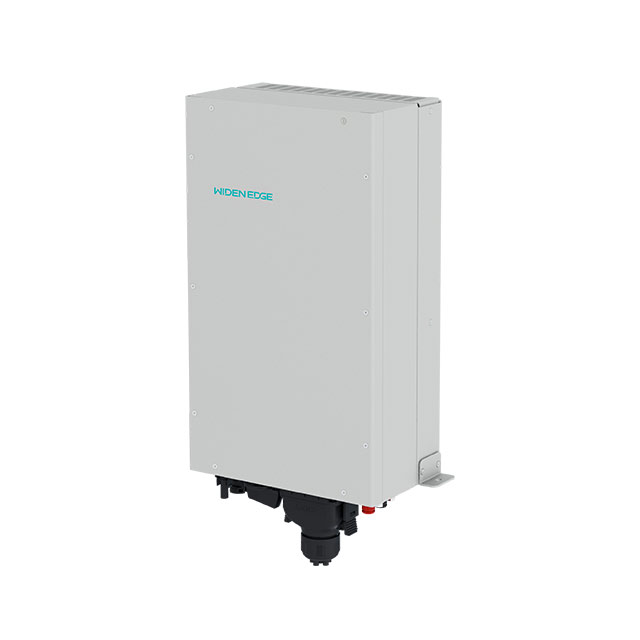
For a 15kW PV DC-DC converter, we would expect the supplier's documentation to answer four questions clearly: what the equipment is, which requirements it meets, how it must be installed, and how it integrates with the rest of the power system.
The first requirement is a complete technical identity. A supplier should provide a current datasheet and product manual identifying the model, rated power, electrical input and output characteristics, operating ranges, environmental limits, dimensions, interfaces, and installation conditions.
That information matters because a converter's nominal power rating does not tell an EPC whether it fits the actual DC architecture. Input-voltage range, output characteristics, allowable operating conditions, expansion method, and connection arrangements can determine whether the equipment works within the project's design.
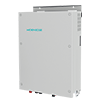
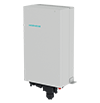
Our published PV/DC 15 product information describes a 15kW converter with a wide voltage range, dual-port output, and stackable parallel expansion. It also identifies high environmental protection and multiple integrated protection functions.
For procurement, however, those headline features should lead to detailed engineering documents rather than replace them. Drawings, terminal definitions, electrical diagrams, and installation instructions should all correspond to the exact model being quoted.
“Compliant with U.S. standards” is not sufficient documentation by itself. The supplier should identify the applicable standards, certification body, certificate or report number, covered model, and scope of evaluation.
UL Solutions identifies UL 1741 as a standard covering inverters, converters, controllers, and interconnection system equipment for distributed energy resources. It also identifies UL 62109 for safety of power converters used in photovoltaic systems. The applicable testing and certification scope depends partly on the equipment's intended application and whether it is designed for utility interconnection.
We would therefore request actual certificates, listing information, or evaluation reports where applicable. A project team should be able to verify that the document applies to the exact converter model rather than to a different product family.
Grid-interactive equipment may also require evidence related to interconnection requirements. UL documentation shows that UL 1741 evaluations can incorporate applicable IEEE 1547 requirements and related grid-support testing. The supplier should identify precisely which requirements apply rather than presenting every U.S. standard as universally relevant.
A project-ready manual should allow a qualified installer to understand the complete physical and electrical installation without relying on informal supplier explanations.
That means clear information on mounting, wiring, grounding, terminal connections, protective devices, cable requirements, clearances, environmental conditions, startup, shutdown, and fault handling. Mechanical drawings should provide dimensions, mounting points, and connection locations that match the delivered equipment.
The manual should also distinguish normal operating procedures from service procedures. If particular inspection, isolation, or commissioning steps are required before energization, those instructions need to be documented explicitly.
This becomes particularly important for DC equipment because wiring mistakes can propagate into the broader PV architecture. A complete installation package reduces interpretation at the jobsite and gives commissioning personnel a defined reference against which to verify the installation.
Protection functions should be traceable to technical descriptions rather than treated as marketing features. Our PV/DC 15 documentation identifies functions including AFCT, string-current detection, insulation-resistance monitoring, and PV reverse-connection protection.
For each relevant function, the project team should ask what condition activates it, what response occurs, whether there are configurable parameters, and what indication or alarm is generated. Supporting test reports can provide additional evidence where a protection claim affects project approval.
Independent evaluation can also become relevant during field review. UL Solutions describes field evaluations as potentially involving documentation review, inspection, applicable testing, and an engineering report against adopted requirements.
The objective is straightforward: an engineer should be able to trace an important safety claim from the product documentation to supporting evidence and, where appropriate, to the installed equipment.
A converter rarely operates as a standalone box. The EPC may need to connect it with PV sources, a DC bus, storage equipment, PCS equipment, monitoring systems, or higher-level controls.
Consequently, the supplier should provide electrical interface diagrams, communication information, alarm definitions, status signals, control parameters, and relevant protocol or register documentation. The exact requirements depend on the project architecture, but the information should be sufficient for controls engineers to understand how the pv dc-dc converter communicates with surrounding equipment.
Environmental information belongs in the same engineering package. The supplier should state applicable temperature, humidity, altitude, enclosure, and installation limitations. Our published product information positions the PV/DC 15 for demanding environments, including islands and dusty conditions, but project engineers still need the underlying operating specifications for design verification.
Before issuing final approval, we would expect the supplier package to contain the exact technical datasheet, product manual, mechanical drawings, wiring diagrams, applicable certificates or listings, relevant test evidence, protection-function information, communication documentation, and environmental specifications.
The package should also maintain model and revision consistency. A certificate for one model, a manual for another revision, and a datasheet with different electrical limits create unnecessary uncertainty during an engineering review.
For U.S. projects, documentation should be treated as part of the equipment—not paperwork added after the purchase. The strongest supplier package lets the EPC verify the converter before shipment, prepare installation documents before delivery, and resolve compliance questions before they reach commissioning.
Our view is that documentation quality should be evaluated alongside converter performance. A technically capable unit becomes much easier to specify when every important electrical, safety, environmental, and integration claim has a corresponding document.
WidenEdge's PV/DC 15 provides a useful example of this product-oriented approach: its published information identifies the 15kW rating, wide-voltage architecture, dual-port output, stackable expansion, environmental protection, and multiple protection functions.
For a U.S. project, the next step is to obtain the detailed evidence and model-specific documents needed to validate those characteristics against the project's actual requirements.
Ultimately, the right supplier documentation is not simply a larger PDF package. It is a traceable chain from product specification to certification, installation, integration, and commissioning.
That chain gives project stakeholders confidence that the selected PV DC-DC converter can move from procurement approval to field operation without avoidable documentation gaps.
Return