Selecting an inverter for a solar, battery, and diesel microgrid is fundamentally a control-system decision. PV generation is variable, batteries can respond rapidly, and diesel generators have operating constraints that cannot simply be treated like another AC power source. The inverter must coordinate these resources while keeping the load supplied during normal operation, disturbances, and changes in generation.

A suitable diesel battery (hybrid power system) therefore needs more than a compatible battery voltage and adequate kW rating. We need to understand how the inverter manages generator interaction, load changes, operating-mode transitions, and power flow before selecting the equipment.
Solar PV primarily provides variable renewable generation. The battery provides controllable energy and rapid power response. The diesel generator supplies dispatchable AC generation but has its own operating limits and synchronization requirements.
That combination makes the inverter a central control element rather than simply a DC-to-AC converter. In a properly engineered system, the battery can respond to load fluctuations while solar generation supplies available renewable power, reducing the amount of diesel generation required.
The architecture also needs to prevent undesirable power flows. The WidenEdge diesel-storage solution specifically uses diesel-engine target power control with backflow prevention, while external current and voltage sampling provides real-time load monitoring.
We would therefore begin the selection process by asking what the inverter is expected to control, not simply how much power it can convert.
Generator interaction is one of the clearest differences between an ordinary solar inverter and an inverter intended for a hybrid microgrid. The system must determine when the diesel generator should operate, how much power it should provide, and how battery and PV power should interact with that generation.
A diesel storage system can be particularly valuable when the battery absorbs short-term fluctuations and reduces unnecessary generator operation. However, the inverter must understand the generator's operating state and prevent inappropriate reverse power or unstable transitions.
The referenced solution is designed specifically around diesel-storage hybrid applications. Its control architecture supports diesel-engine target power control, automatic diesel-generator management, and seamless switching between grid-connected and off-grid modes.
For procurement, we would ask the inverter manufacturer to explain generator synchronization, power-sharing logic, minimum generator loading strategy where applicable, and what happens when solar output changes rapidly while the generator is running.
Nominal load is only the starting point. A microgrid inverter should be evaluated against continuous demand, short-duration overloads, motor starting, unbalanced loads, and the critical loads that must remain energized during abnormal conditions.
A three-phase site can also contain substantial single-phase equipment. That makes phase-by-phase behavior relevant, especially for remote industrial facilities, mining sites, emergency systems, and other applications where the load is not perfectly balanced.
The referenced solution uses a transformerless three-phase four-wire architecture and supports 100% unbalanced loads. It also specifies 1.5-times overload capability for three seconds. These are useful examples of specifications that should be examined against the actual load profile rather than treated as generic selling points.
Our selection process would therefore map the inverter to the site's highest-priority loads first. If refrigeration, pumps, compressors, motors, or other demanding equipment must remain online, their transient requirements need to be reflected in the power-conversion design.
The most revealing part of a hybrid microgrid specification is often what happens during a transition. Solar production can fall suddenly because of cloud cover. A large load can start unexpectedly. The diesel generator may need to start as battery state of charge declines or renewable generation becomes insufficient.
A capable inverter should respond to these events without leaving the microgrid dependent on manual intervention for routine operating changes. Fast control of battery power can help bridge changes in generation and demand, while synchronization functions support coordinated generator operation.
WidenEdge's solution identifies automatic load-fluctuation control and a built-in synchronization interface as part of its system architecture. The stated objective is rapid response to sudden load changes.
Grid-forming capability is also worth examining for systems that must operate independently of a stable utility grid. The MGC platform uses VSG and droop control and supports seamless switching between grid-following and grid-forming modes.
These functions matter because an inverter may perform well during steady-state operation yet still be poorly suited to a microgrid with frequent source transitions.
Project requirements rarely remain completely static. A mining operation may add production equipment, an island resort may increase renewable capacity, or an emergency-power installation may need additional storage later.
The inverter architecture should therefore accommodate the intended expansion strategy. AC-side and DC-side coupling can produce different integration requirements, so the project team should determine where PV, batteries, diesel generation, and the inverter will connect before equipment is finalized.
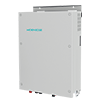
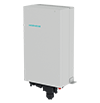
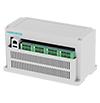
Parallel operation can also provide a path toward higher conversion capacity. The referenced WidenEdge solution supports up to 32 units in parallel operation, while its solution portfolio includes MGC 600kW+, MGC MK1, MGC 45kW, and Hub products.
We would verify the actual parallel-control architecture, communications, protection coordination, and commissioning procedure before assuming that multiple units can simply be connected together.
The best inverter for a solar-battery-diesel microgrid is not necessarily the unit with the highest efficiency or largest output rating. It is the unit whose control architecture matches the site's operating strategy.
Our evaluation would cover five questions: Can the inverter coordinate the diesel generator? Can the battery respond quickly enough to load changes? Can PV and battery power be coupled in the intended architecture? Can the system support the required unbalanced and transient loads? Can it maintain stable operation when the utility grid is unavailable?
WidenEdge's diesel-storage hybrid solution is designed for applications including island microgrids, mining microgrids, emergency power, and post-disaster reconstruction. The published system also describes a solar-diesel-storage project in Zimbabwe and an island project in Madagascar, illustrating the type of operating environments the architecture targets.
For us, the decisive selection criterion is coordination. A diesel battery (hybrid power system) should be designed around how the three energy sources share responsibility for the load, especially during source changes and abnormal conditions.
A properly selected diesel storage inverter should therefore be evaluated as the control heart of the microgrid, not as an isolated power-conversion component. Once the load profile, generator behavior, battery role, PV architecture, and required operating modes are clearly defined, the appropriate inverter topology becomes much easier to identify.
Return